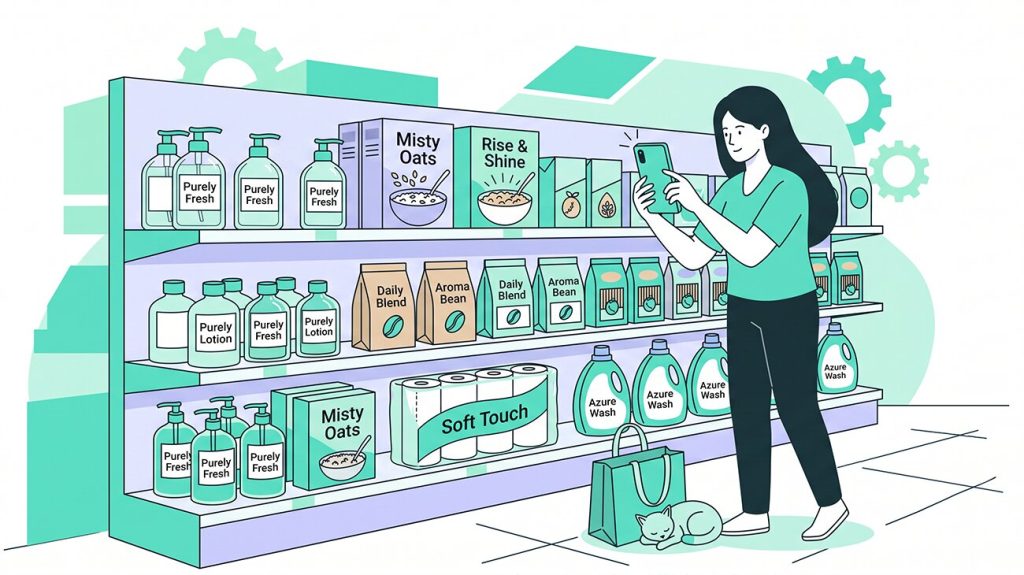

A shopper comes into a drugstore to buy sunscreen. She finds the right aisle, looks at three shelves of similar white bottles, spends about fifteen seconds trying to compare them, and leaves without buying anything. The product was in stock and the price was competitive. But the display did not show her the difference between the bottles.
This kind of missed purchase can happen repeatedly across a retail network and often never appears as a clear reason in reporting. The store records a visit and no purchase, and nobody records the reason.
Visual merchandising is the work that prevents this result. It covers how a store is laid out, how products are placed on the shelf, what the window shows, and how quickly a person understands where to go. These decisions control what the shopper notices, and what the shopper notices affects what the shopper buys.
Many companies treat this topic as design work that a creative team does before a season launch. In daily retail work it is an operational process with rules, standards, and results that can be measured, in the same way promotions are measured.
In this article, we will look at what visual merchandising means, what it does inside a store, its goals, functions, elements, and principles, and how retail teams keep it consistent across hundreds of locations in 2026.
Table of Content:
- Key Takeaways
- What Is Visual Merchandising?
- What Does Visual Merchandising Actually Do in a Store?
- Goals of Visual Merchandising
- Main Functions of Visual Merchandising
- Core Elements of Visual Merchandising
- Principles of Effective Visual Merchandising
- Types of Visual Merchandising in Retail
- Common Challenges in Visual Merchandising
- How Modern Stores Manage Visual Merchandising in 2026
- How Goods Checker Helps Retailers Control Visual Merchandising
- Visual Merchandising as a Tool for Attention and Sales
- FAQ
Key Takeaways
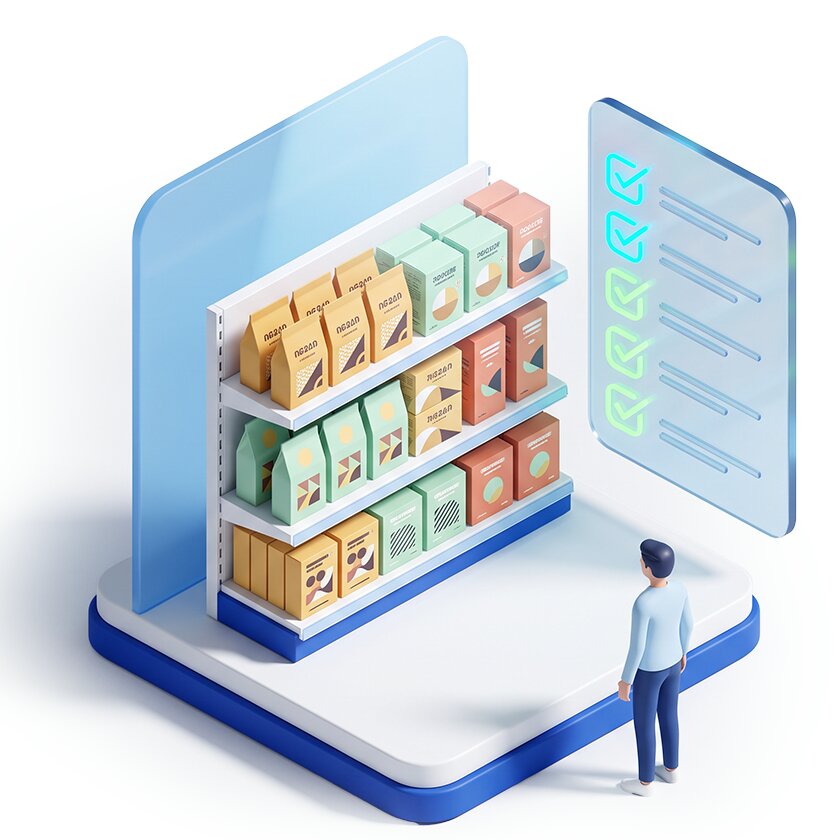
- Visual merchandising is how a store presents products and organizes space so shoppers notice the right items and buy more.
- Its goals are to attract attention, guide the customer journey, improve product perception, and increase sales and average basket.
- Decoration makes a store look good. Visual merchandising can be evaluated through conversion, basket size and category sales, as well as execution metrics such as planogram compliance and share of shelf.
- Standards work only when stores follow them, so execution is measured through planogram compliance, share of shelf, and product availability.
- Photo audits with computer vision check hundreds of stores by one standard and return results in minutes.
What Is Visual Merchandising?
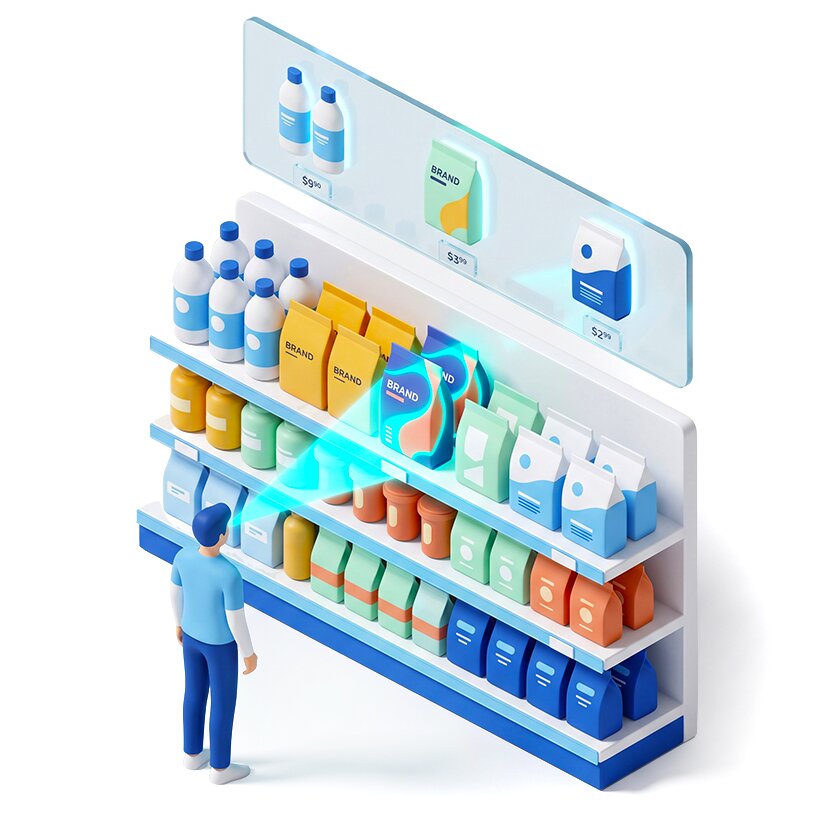
The simplest definition looks like this. Visual merchandising is a set of techniques for presenting products and organizing store space so that shoppers notice the right items, find what they came for, and buy more than they planned.
What is meant by visual merchandising in practice is fairly concrete. Window displays, store layout, zoning, shelf presentation, lighting, color, signage, price tags, and promotional materials all belong to it. Together they tell the shopper where to go and what is important in each category, without help from staff.
“Visual merchandising sits inside merchandising as a whole. General merchandising decides assortment, stock levels, and how shelf space is allocated, while the visual side decides how a person perceives all of it in the aisle. One answers what goes where, the other answers whether the shopper actually sees it.”

This is the difference between store decoration and visual merchandising. Decoration makes a space pleasant for the visitor. Visual merchandising uses the same materials, such as light, color, props, and composition, and gives each element a commercial purpose. A display that looks attractive while shoppers still do not understand what is for sale does not do this work.
| Question | Store decoration | Visual merchandising |
|---|---|---|
|
Main purpose |
Make the space look pleasant
|
Sell more of the right products
|
|
Starting point |
Design idea or season theme |
Category task, shopper behavior, sales plan |
|
Who decides |
Designer or store team
|
Category management, trade marketing, merchandising
|
|
Result is judged by
|
How the store looks
|
Conversion, basket size, category sales
|
|
Typical output
|
A themed window, decor elements |
Layout, zoning, planogram, POSM, promo zones |
What Does Visual Merchandising Actually Do in a Store?
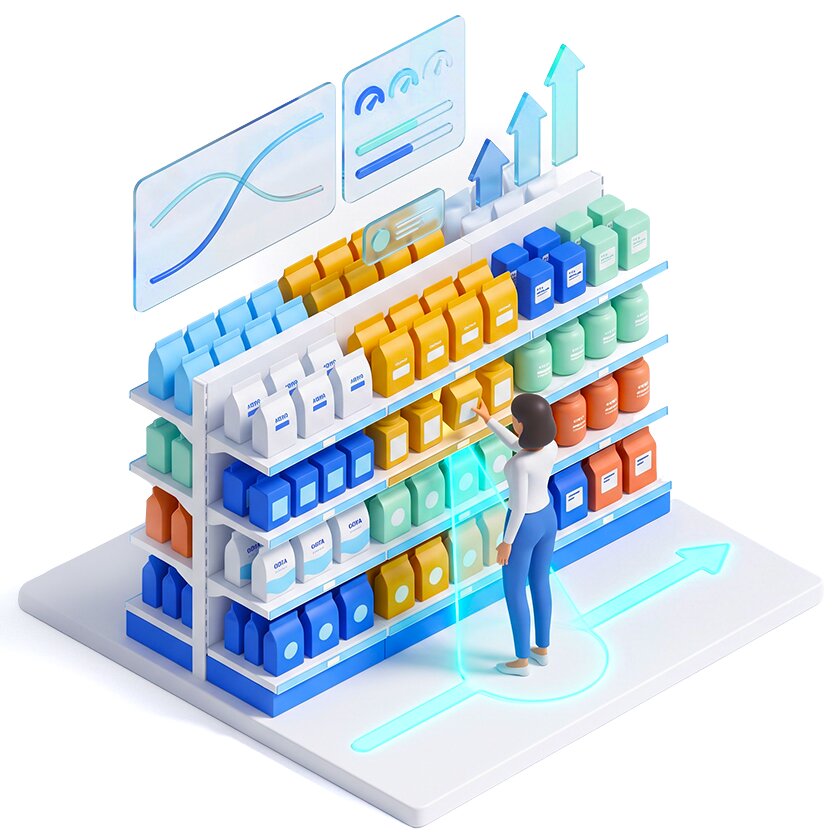
Managers who ask what you mean by visual merchandising usually want the practical answer, so here are the five things it does every day on the sales floor.
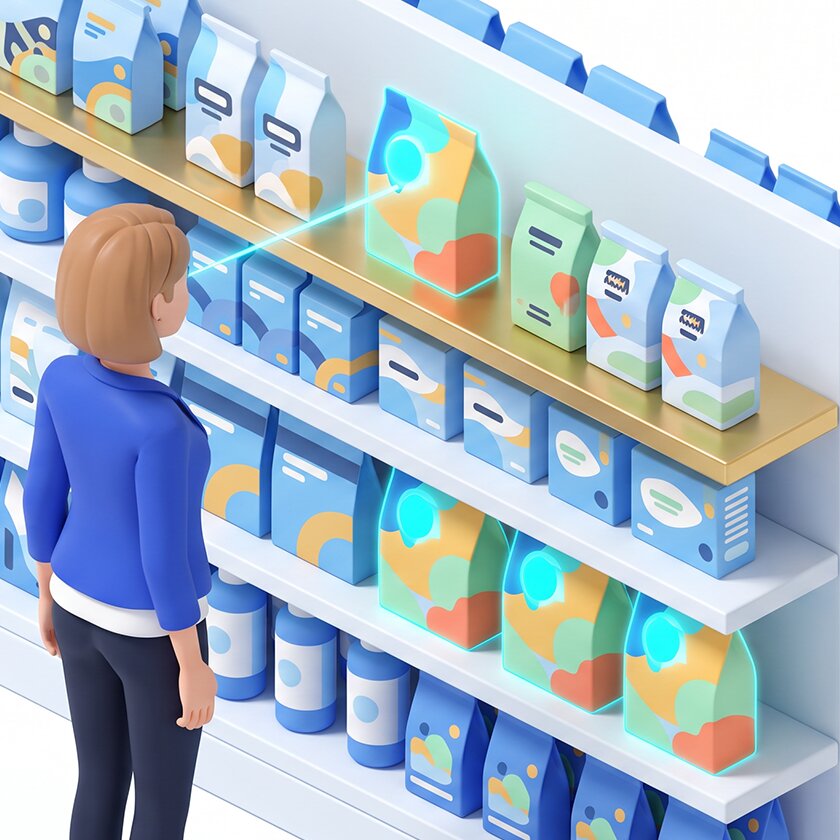
- Attention. A supermarket shopper walks past thousands of items and looks closely at a handful. Contrast, lighting, block size, and shelf level decide which products she looks at.
- Navigation. Layout and signage set the route, so they influence whether a shopper reaches high-margin categories or heads straight for checkout.
- Product clarity. Facing packs forward, grouping a brand into one block, and keeping price tags readable let shoppers compare options in seconds instead of giving up.
- Promo and category support. Promotional zones, end caps, and themed displays give trade marketing campaigns a defined place inside the store.
- Sales. All of this can affect several business metrics, including conversion of visits into purchases and average basket size.
Goals of Visual Merchandising

Goals answer why a retailer invests in store presentation at all. Four visual merchandising goals cover most of what teams are trying to achieve.
Attract Attention
The first job is getting noticed. A lit window, a strong color block, or a single main product on a clean stand holds the shopper’s attention for the second or two it takes to decide whether to come closer.
Guide the Customer Journey
Store design and customer journey are closely connected. Entrance zones, main aisles, category signage, and display placement together decide the route a person takes and how much of the assortment they see along the way.
Improve Product Perception
Presentation changes how valuable a product looks. The same bottle of olive oil looks premium on a lit shelf with free space around it and ordinary when it stands tightly between two competing labels.
Support Sales and Conversion
The other three goals work toward this one. Visual merchandising and sales are connected through impulse purchases, larger baskets, and fewer shoppers who leave the aisle without buying.
A shopper who came for pasta and left with pasta, sauce, and grated cheese did not plan the last two items. The placement of the products next to each other prompted the purchase.
Main Functions of Visual Merchandising

Goals describe the outcome. Visual merchandising functions describe the work that happens every day to get there.
Presentation of Products
The first function is showing the product clearly. That means the right number of facings, packs turned to face the shopper, no gaps in the row, and no item hidden behind a taller neighbor.
Space Organization
The second function is dividing the floor. Categories get zones, zones get a share of the walking route, and promotional areas get the spots with the highest traffic.
Communication with the Shopper
The third function is giving the shopper information without a staff member. Category signage, shelf talkers, price tags, and promo materials answer the questions a shopper would otherwise ask an employee, or leave without asking.
Reinforcing Brand Identity
The fourth function is consistency of image. A chain wants every location recognizable, and a manufacturer wants the same brand block in every store where the product is listed. Both depend on presentation rules being followed on the floor.
Core Elements of Visual Merchandising
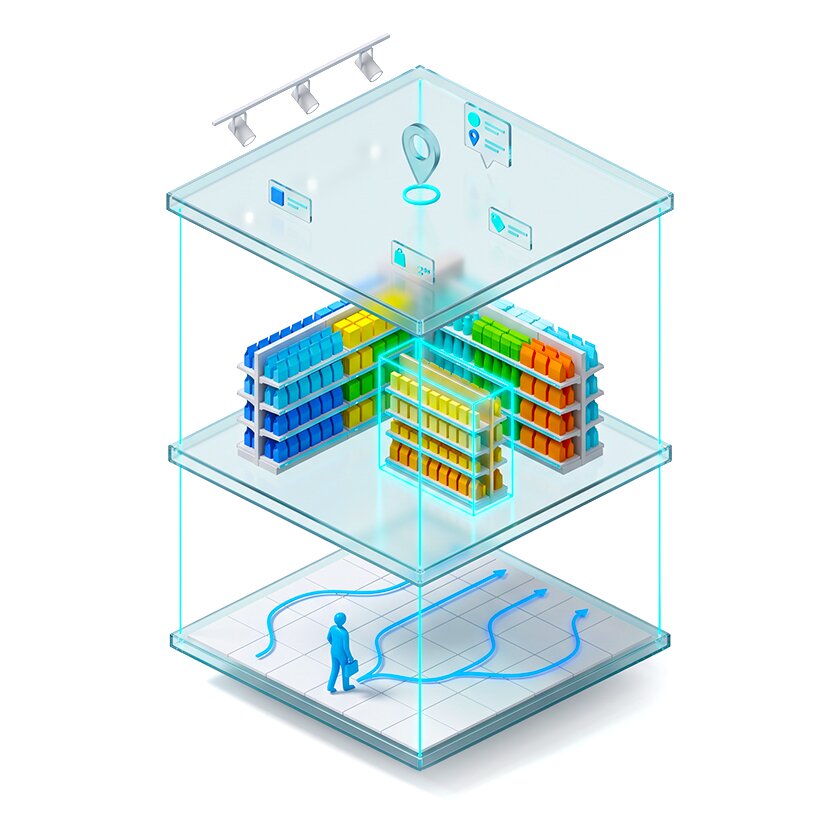
These are the parts visual merchandising is built from. Check each one against one question. Does it help the shopper buy, or does it only fill space?
Window Displays and Storefronts
The window is the first contact point and works at a distance. One clear idea, such as a season, an occasion, or a complete outfit, is usually easier for shoppers to understand than a display built around many unrelated products.
Store Layout and Zoning
Layout decides which zones nearly every visitor sees and which zones almost nobody reaches. Entrance position, aisle width, and checkout placement are set early and hard to fix later with displays or promotions.
Zoning groups categories the way shoppers think about them. An In Zone Brands retail test recorded a 200% annual sales increase after placing children’s juices beside fresh produce
Product Placement and Shelf Presentation
Inside the category, shelf level and block size have the largest effect. Products at eye and hand level sell best, so moving a strong SKU up from the bottom shelf usually increases its sales.
The planogram records every agreement about facings, position, and product sequence on the shelf.
Lighting, Color, Signage, and Props
These are the everyday visual merchandising tools. Warm light makes fresh food look more appealing, accent light makes a promo zone more visible, and color contrast separates one block from the next.
Signage and props carry information, and the quality of their installation is visible. A shelf talker that is half detached from the rail looks worse than no shelf talker at all.
Seasonal and Promotional Displays
Seasonal themes give shoppers a reason to look at products they already know. Back-to-school, grilling season, and holiday gifting each justify a temporary zone with its own logic and stock plan.
Principles of Effective Visual Merchandising
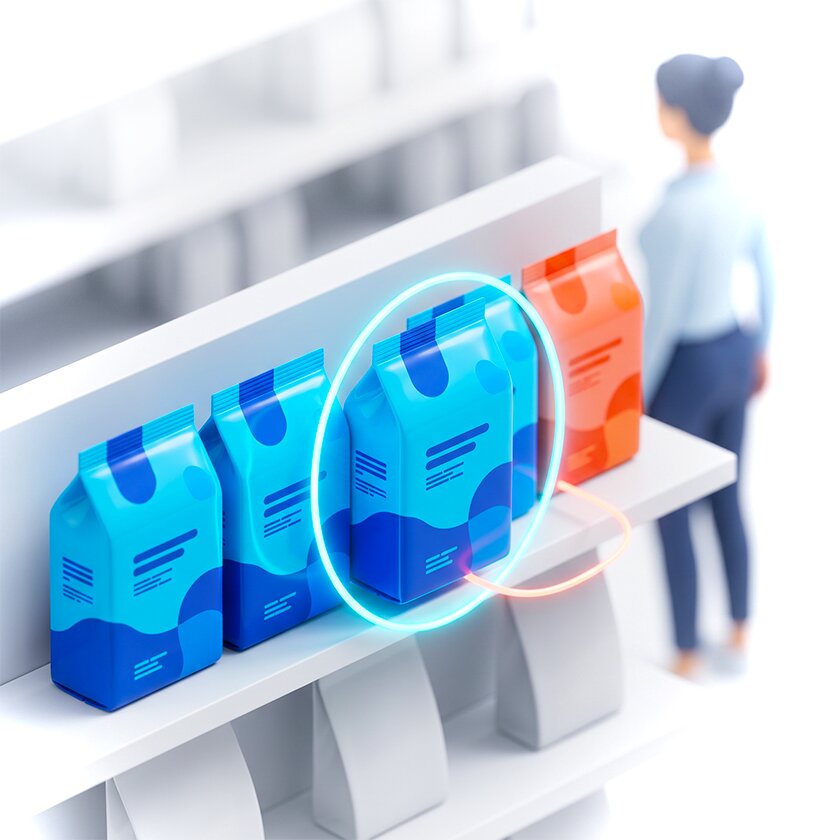
The visual merchandising principles below work the same way in a grocery store and in a cosmetics chain, because they describe shopper behavior rather than taste.
Clarity
A shopper should understand the shelf without effort. Clear category signage, readable price tags, and neat product blocks reduce the number of people who leave without choosing.
Consistency
The visual language should hold across the chain. When fonts, price tag formats, and display standards differ between locations, the brand looks poorly managed and comparing store results becomes unreliable.
Relevance
Presentation has to fit the format and the audience. A discounter with boutique-style aisles confuses shoppers about its price level, and a premium store that displays goods on pallets makes its prices harder to justify.
Balance Between Beauty and Function
An attractive store keeps people inside longer and brings them back. The question is whether the design also increases sales, because a display that customers like while category sales stay the same needs to be changed.
Types of Visual Merchandising in Retail

Visual merchandising in retail shows up in several forms, and most chains run all of them at once.
In-Store Visual Merchandising
This is the permanent layer, covering layout, category zones, shelf presentation, lighting, and navigation. It defines the basic shopping experience in the store.
Window and Exterior Merchandising
The exterior works before a person enters the store. Facade, signage, and window displays affect how many people passing by come inside, which is most important for high street and mall locations.
Promotional Visual Merchandising
The temporary layer includes end caps, promo stands, secondary placements, and themed zones. It is used for campaigns, launches, and seasonal promotions, and its result depends on how quickly stores set it up.
Cross-Merchandising and Category Storytelling
Cross-merchandising places complementary products together so a shopper sees a complete solution. Charcoal, sausages, and disposable plates in one grilling zone is a simple example.
Category storytelling extends the idea, building the space around a situation such as breakfast, movie night, or a first apartment instead of a product classification.
Common Challenges in Visual Merchandising
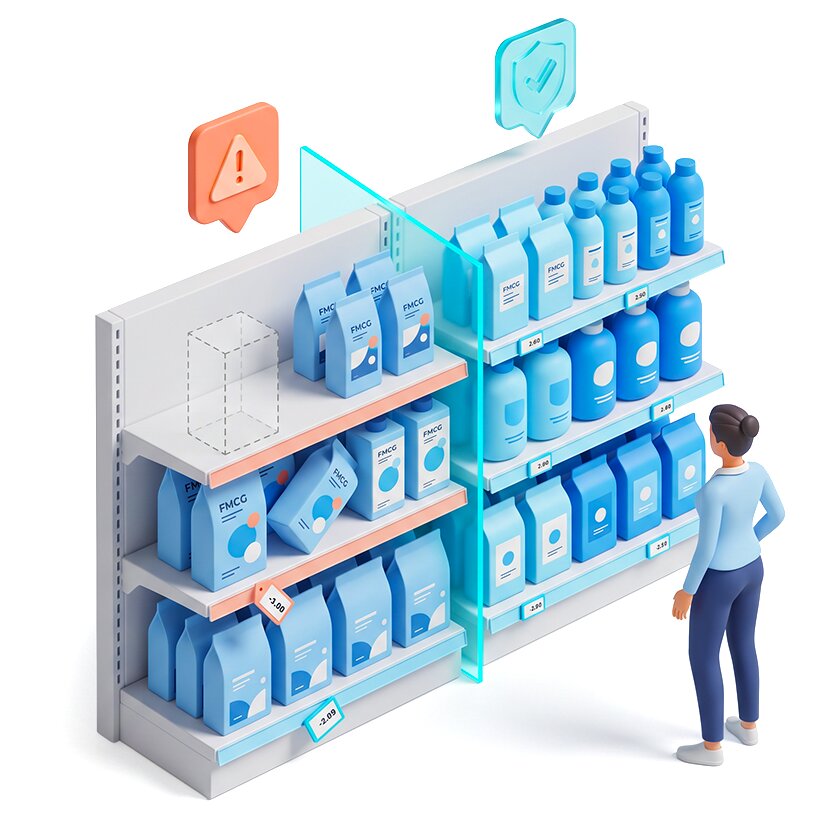
Most problems in this area come from execution rather than from ideas.
Visual Clutter
Too many messages reduce the effect of each one. When every shelf has a promo sign, shoppers stop reading them and do not notice the important offer.
Inconsistent Execution Across Stores
A head office standard becomes increasingly difficult to execute consistently across hundreds of stores. Displays go up late, blocks get rebuilt by whoever restocked last, and the same merchandising standards produce different results in different locations.
Lack of Measurement
Many teams design displays carefully and never check the result. Without measurement, decisions are based on opinion, and a discussion about a display becomes a discussion about personal taste.
How Modern Stores Manage Visual Merchandising in 2026

Manual control has limits. A supervisor with a checklist covers a few stores a week, so most of the network stays unchecked most of the time. This is why store presentation is increasingly managed with data.
Standards and KPIs
Presentation becomes manageable once it is written down and measured. Chains define standards for facings, blocks, signage, and promo zones, then track compliance.
The retail KPIs that matter here are familiar ones, such as planogram compliance, share of shelf, on-shelf availability, price tag accuracy, and promo execution rate.
AI and Computer Vision
A field employee photographs the shelf, and the system recognizes products down to SKU level, compares the image against the planogram, and reports what is wrong. Missing items, misplaced SKUs, a broken brand block, or a missing price tag all show up automatically.
The value is coverage and speed, since hundreds of stores get checked by the same standard and results arrive in minutes. Our overview of AI in merchandising covers what these systems handle well today.
Cross-Merchandising and Retail Execution
Visual merchandising is one part of retail execution, together with availability, pricing, and promo compliance. The same store visit that checks shelf presentation can confirm whether the cross-merchandising zone was actually built and stocked as planned.
How Goods Checker Helps Retailers Control Visual Merchandising

Goods Checker is a computer vision platform for shelf monitoring, and visual merchandising execution is one of the things it measures. A merchandiser photographs the shelf in the app, recognition runs at SKU level, and the report appears while the employee is still in the store.
Managers see planogram compliance, share of shelf, product availability, price tag accuracy, and promo material presence, broken down by store, category, brand, and employee. Instead of a folder of photos nobody has time to review, the team gets numbers it can act on the same day.
“The effect shows up in operational metrics. A merchandising agency working across 4,500 outlets cut audit time per store roughly in half and reduced reporting time by 70%, about 20 minutes instead of an hour. A gas station chain monitoring 200 SKUs across 500 remote locations raised planogram compliance from around 50% to 90%.”
Visual Merchandising as a Tool for Attention and Sales

Visual merchandising is a system for managing attention. It decides what a shopper notices first, how fast they find what they came for, and how much of the store they see on the way.
It is a commercial tool with responsible owners, standards, and metrics, and appearance is one part of the work rather than its purpose. Retailers that get value from visual merchandising manage presentation the way they manage pricing or availability, so it is defined, executed, and checked.
The last part is where most problems occur. A standard is useful only when stores follow it, and checking hundreds of locations through supervisor visits is no longer realistic. Regular photo audits with automatic recognition give managers real data about store presentation instead of assumptions.
FAQ
What is visual merchandising?
It is the practice of presenting products and organizing store space so shoppers notice items, navigate easily, and buy more. It covers windows, layout, shelf presentation, lighting, signage, and promo displays.
What does visual merchandising mean in a store?
On the floor it means concrete decisions, such as which products get eye-level shelves, how a brand block is built, and where the promo zone stands.
What is the meaning of visual merchandising for a manufacturer?
For an FMCG brand it is the work of making the product visible in the store. Facings, shelf level, block integrity, and POS materials decide whose product shoppers see first.
Why is visual merchandising important in retail?
Most brand choices are made at the shelf, so presentation affects conversion and basket size directly. Good assortment and pricing bring in less revenue when the product is hard to find.
What are the main goals of visual merchandising?
Attract attention to products, make the store easy to navigate, improve how products are perceived, and increase sales and average basket.