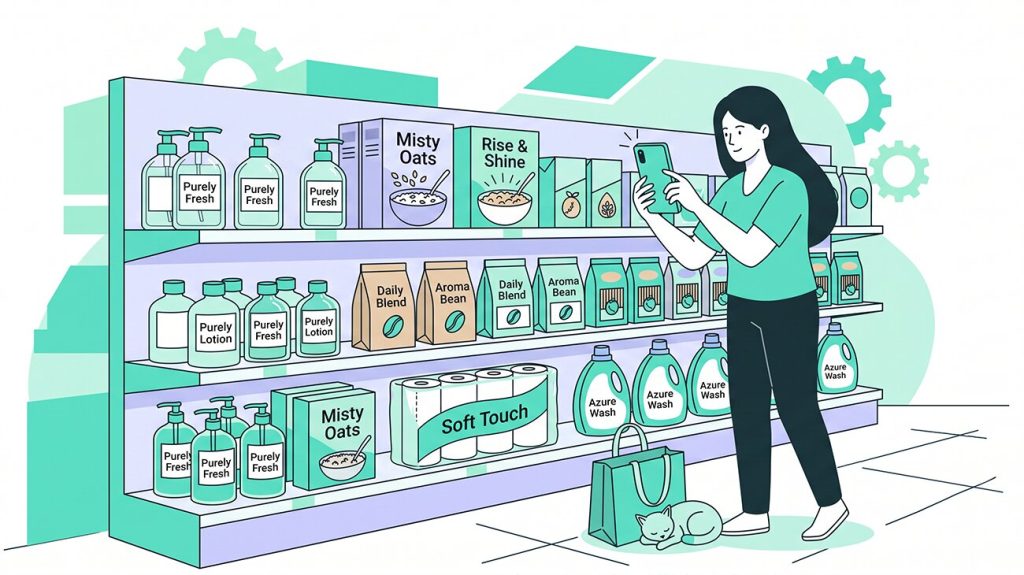


Cross-merchandising is often seen as visual merchandising, judged on how a display looks rather than what it sells. It belongs with commercial merchandising, measured by basket size, attach rate and incremental lift. That gap between the two views decides whether a display earns money or just takes up space on the shelf.
The idea is simple enough to set up in any store. You place items that belong to the same shopper occasion next to each other, so the customer sees a complete solution instead of a single product. It remains one of the cheapest ways to grow basket size, because it uses space and logic the store already has.
By 2026, the execution is changed. Retail teams now plan cross-merchandising with sales data, run it across hundreds of stores with different shopper profiles, and track it in near real time with computer vision.
This article covers what cross-merchandising means, why retailers use it, how to design and measure it, and how AI and data make these programs work store by store instead of one national template.
Table of Contents
- Key Takeaways
- What Is Cross-Merchandising in Retail?
- Why Retailers Use Cross-Merchandising: Main Goals and Benefits
- Core Elements and Best Practices of Cross-Merchandising
- Cross-Merchandising Examples: FMCG and Non-Food
- How to Design Effective Cross-Merchandising Displays
- Measuring Cross-Merchandising Success with Data
- Cross-Merchandising in 2026: AI, Computer Vision and Hyper-Local Execution
- How Goods Checker Helps Retailers Manage and Optimize Cross-Merchandising
- Common Cross-Merchandising Mistakes and How to Avoid Them
- Cross-Merchandising That's Creative and Measurable
- FAQ: Cross-Merchandising Basics
Key Takeaways
- Cross merchandising places complementary products together to increase basket size.
- The best cross merchandising displays are built around shopper missions rather than product categories.
- Success should be measured through basket size, cross-sell rate and incremental sales lift.
- Computer vision and AI make cross merchandising scalable across large retail networks.
- Hyper-local execution allows retailers to tailor displays to specific stores and shopper groups.
What Is Cross-Merchandising in Retail?
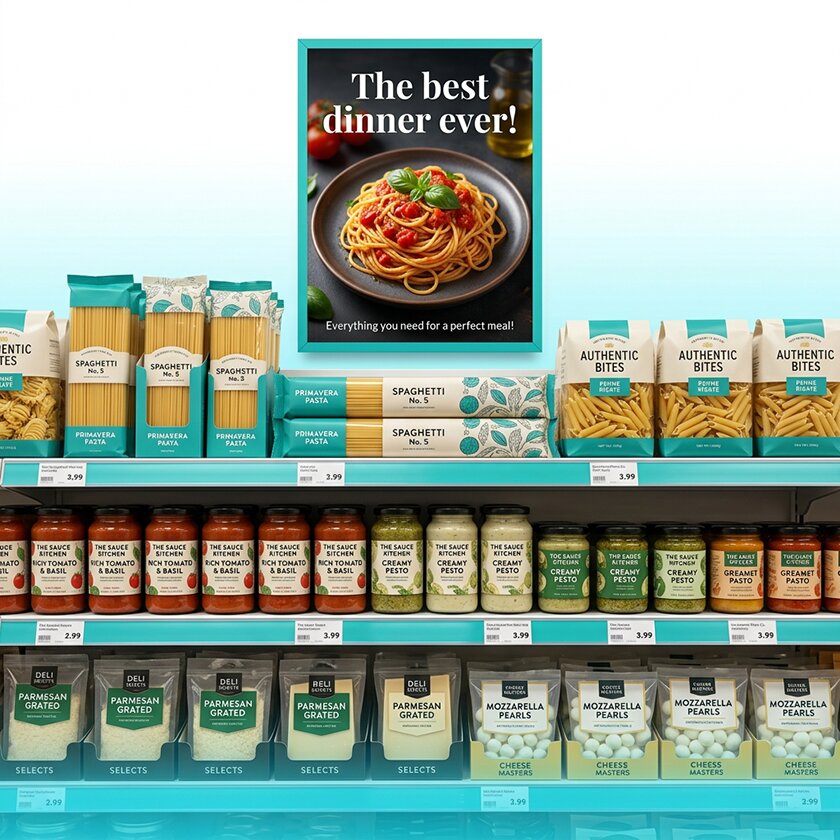
Cross-merchandising is the practice of placing complementary products together, either side by side or in one themed zone, so the shopper sees a ready-made combination and adds more to the basket. For example, the pasta sits next to the sauce, the toothbrush next to the toothpaste, the wine next to the cheese. Each pairing answers a question the shopper was already going to ask.
“The meaning is clearer next to traditional merchandising. Classic merchandising organizes the store strictly by category, so all the pasta sits in one place, all the cheese in another, and the shopper puts the combination together themselves. Cross-merchandising breaks that category line on purpose, trading tidy aisles for the convenience of a shopper mission.”

It works in both physical and online retail. In a store, it shows up as an endcap or a secondary display. Online, it shows up as the “frequently bought together” block under a product page. The logic is identical in both places. You anticipate the next item the shopper needs and put it within reach.
Why Retailers Use Cross-Merchandising: Main Goals and Benefits
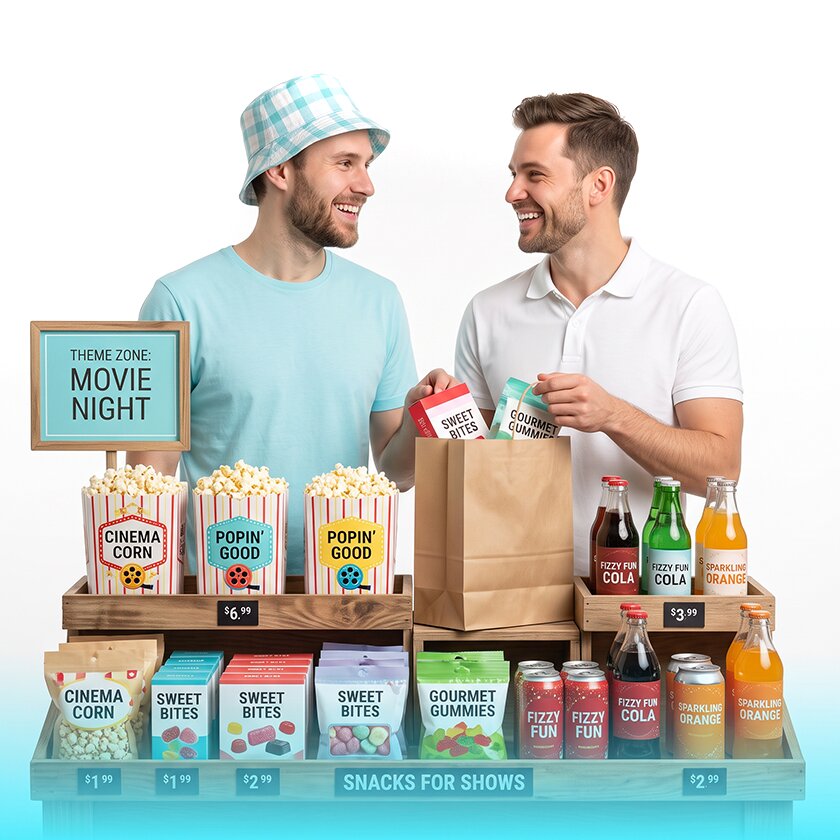
Cross-merchandising earns its place because it serves the shopper and the retailer at the same time. The benefits fall into four areas, and most well-run displays deliver more than one of them at once.
Make Shopping Easier and More Inspiring for Customers
The first benefit is less friction. When everything for a meal sits in one place, the shopper does not have to remember the sauce or go back for the cheese. A pasta night display with pasta, sauce, parmesan and garlic bread turns four separate decisions into one.
The second benefit is inspiration, because a themed display gives the shopper an idea they did not arrive with. A “movie night” zone with popcorn, soda and confectionery, or a “back to school” set with lunchbox snacks and juice, plants the occasion in the shopper’s mind and lets the products sell the plan.
Increase Basket Size and Cross-Sell Performance
Every extra item that goes into the basket because of a good pairing is revenue the store would not have got otherwise. A shopper who came for chips and leaves with chips, salsa and beans has spent more without feeling pushed, because the extra items were useful, not promotional.
This is where cross-merchandising directly drives cross-sell. The display does the work a salesperson would do in another setting, it suggests the matching product at the moment the shopper is deciding.
Boost Visibility for New and Slow-Moving Products
A new product placed alone on its home shelf depends entirely on shoppers walking down that aisle. Placed next to an established best-seller, it borrows that product’s traffic and some of its trust. A new hot sauce next to the leading tortilla chips reaches every shopper picking up the chips.
The same logic helps slow movers. A specialty cracker that sells poorly in the cracker aisle can move steadily beside a popular cheese, because the shopper is already in a snacking mindset.
Strengthen Brand and Category Positioning
Cross-merchandising also ties a brand to a moment. When a coffee brand keeps appearing next to breakfast pastries, the shopper links it to the morning routine. When a sports drink sits near sports equipment or protein bars, it claims the post-workout occasion.
For the retailer, this builds clearer category stories. Shoppers learn where to find a whole occasion, and the store gets easier to shop on repeat trips.
Core Elements and Best Practices of Cross-Merchandising
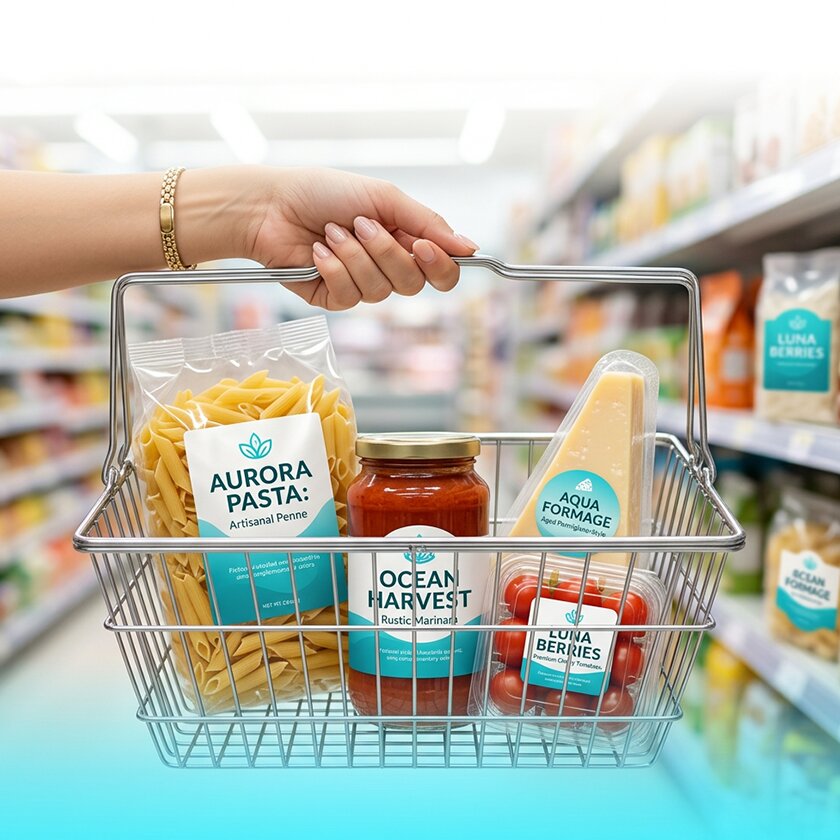
Good cross-merchandising follows a few rules that separate a useful display from a random group of products. The points below apply whether you run four stores or four hundred.
Start from Shopper Missions and Use Cases
The starting point is the shopper’s intent. Work out what the shopper is trying to do, such as cooking dinner, buying a quick snack for the road, or caring for a baby, and then group the products that finish that job.
When you build from the mission, the pairing looks obvious to the shopper. When you build from the category, you tend to group products that share a shelf but not an occasion, and the display works poorly.
Pair Products with a Clear Logic
There are two reliable ways to pair. The first is complementary products that one shopper uses together, such as pasta and sauce, cereal and milk, or chips and salsa. The link is so direct that the shopper barely notices it as a suggestion.
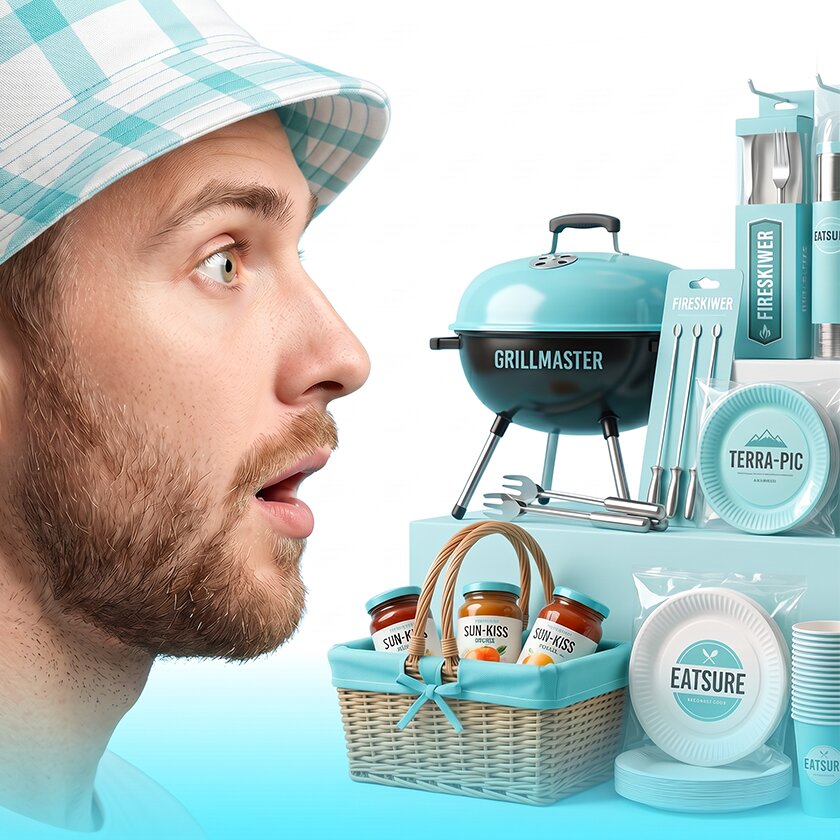
The second is thematic bundles built around an event or a season, such as game night, a grilling weekend, or cold and flu season. These group products from very different categories, for example charcoal, lighter fluid, sauces and paper plates for a barbecue set, around a single occasion.
Use Cross-Merchandising Displays to Tell a Simple Story
A shopper should understand a cross-merchandising display in a second or two. If they have to study it to see what the products have in common, the display has already failed. One clear occasion, a few products, and a sign that names the idea is enough.
Visual noise breaks this, since too many items, competing messages, or a layout that fights itself push the shopper to move on rather than engage.
Make Displays Seasonal, Timely and Location-Aware
The best displays match what shoppers need right now. A school-supply bundle in late August, a grilling set before a long weekend, or a cold-remedy display at the start of flu season each match a need the shopper already feels.
Location matters as much as timing. A store near a stadium can build game-day sets, while a store in a young-family area does better with quick-dinner and children’s snack sets. The same chain often needs different displays in different districts.
Avoid Clutter and Brand Confusion
The common failures are predictable, starting with too many SKUs that turn a clear idea into a mess. Pairings that ignore real shopper behavior, such as linking products no one buys together, read as filler. Competing brands forced into one display confuse the message and weaken the occasion.
The fix is restraint, which means fewer products, one clear theme, and pairings backed by what shoppers actually do.
Cross-Merchandising Examples: FMCG and Non-Food
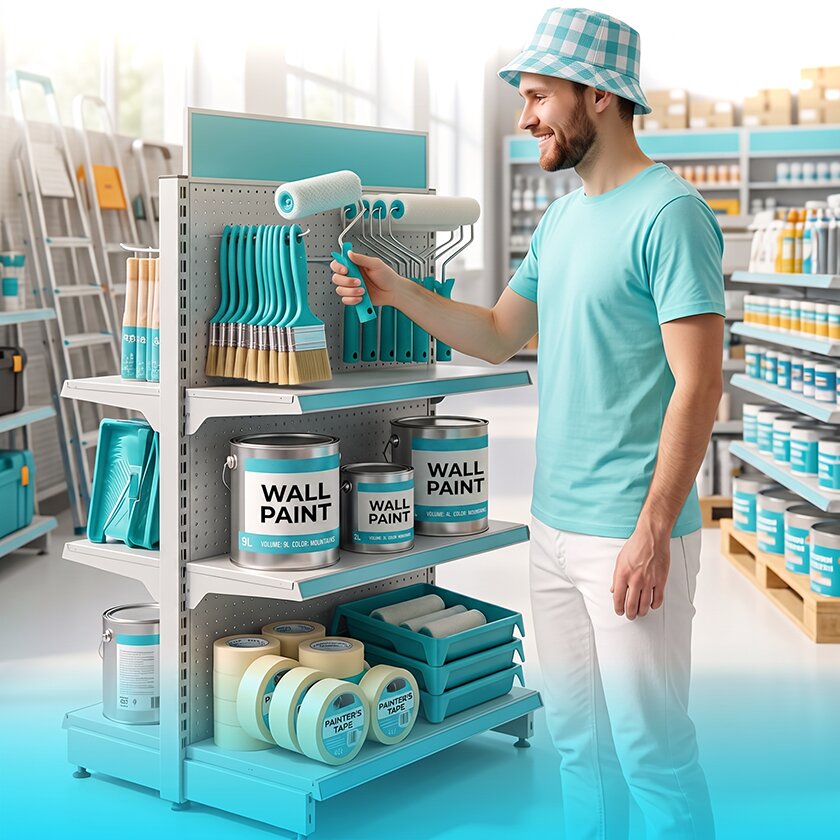
The quickest way to understand cross-merchandising is to look at displays you have probably walked past. The examples below cover grocery, convenience, and a few non-food categories.
Grocery Store Cross-Merchandising Ideas
Grocery is where cross-merchandising shows up most often, because so many products fit a clear meal or moment.
- Italian dinner. Pasta, jarred sauce, grated parmesan and garlic bread in one display cover the full meal.
- Taco night. Tortillas, salsa, refried beans and a taco spice mix let the shopper build dinner from a single stop.
- Breakfast. Cereal, milk, juice and coffee grouped together fit the morning routine.
- Fresh and ready. Salad kits with dressings and toppings nearby turn a side dish into a complete one.
- Wine and cheese. Wine, a selection of cheeses and crackers in one display give shoppers an easy entertaining spread.
Convenience and Impulse Zones
Convenience stores and impulse zones rely on speed and a narrow set of obvious pairings.
- Drinks and snacks at the checkout catch the last-second add-on.
- A quick-dinner kit near the entrance serves the shopper who came in without a plan.
- Coffee paired with pastries near the door captures the morning stop.
Non-Food: Fashion, DIY, Electronics
Cross-merchandising works just as well outside the grocery store.
- In fashion, a dress shown with a matching belt, shoes and a piece of jewelry sells the full outfit instead of one garment.
- In DIY, paint shown with brushes, masking tape and sandpaper gives the shopper everything the job needs.
- In electronics, a phone paired with a case, a charger and headphones turns one purchase into a small bundle.
Online Cross-Merchandising and “Frequently Bought Together”
E-commerce uses the same approach with data instead of shelves. The “frequently bought together” block, the recommended add-ons at checkout, and curated bundles all place complementary products in front of the shopper at the deciding moment. The shelf is a screen, but the logic of pairing has not changed.
How to Design Effective Cross-Merchandising Displays
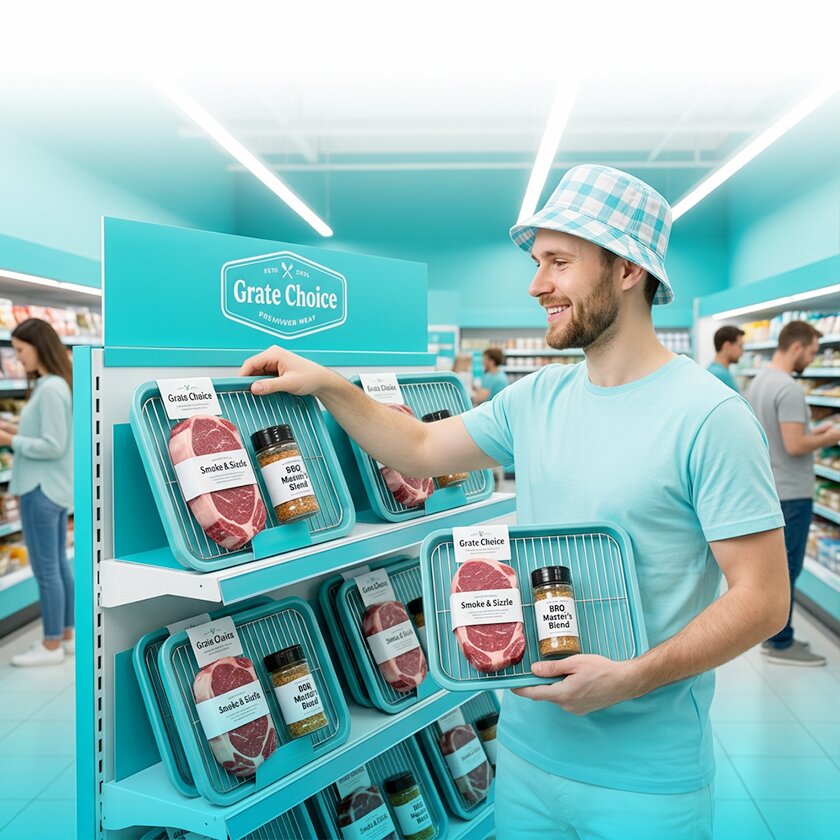
Designing a display well comes down to three choices. Where it goes, how it looks, and how it fits the shopper’s path through the store.
Choosing the Right Location: Aisles, Endcaps, Checkout and Secondary Placements
Location decides how many shoppers see the display at all. Endcaps work because they sit at high-traffic turning points where shoppers naturally slow down. Secondary placements away from the home aisle reach shoppers who would never walk down that aisle. The checkout zone suits small, low-consideration add-ons the shopper decides on in seconds.
Visual Rules: Color, Height, Signage and Simplicity
The visual basics still apply, so place the main products at eye level, where they get noticed first. Keep signage short and readable, with a clear call to action that names the occasion. Use color and grouping to make the pairing obvious, and do not overfill the space.
Store Layout and Flow: Make the Journey Natural
A cross-merchandising display should sit along the path the shopper already walks, not force a detour. Place the grilling set where shoppers pass on the way to the meat counter, or the breakfast pairing near the dairy section. When the display fits the natural flow, it works as a helpful reminder rather than an interruption.
Measuring Cross-Merchandising Success with Data

A display can look good and still do nothing for sales. The only way to know is to measure it against a baseline, using a few metrics that connect the shelf to the receipt.
Key Metrics: Basket Size, Cross-Sell Rate and Incremental Sales Lift
Three numbers tell most of the story.
- Basket size, the average value or item count per transaction, shows whether shoppers are buying more overall.
- Cross-sell rate, also called attach rate, measures how often the paired item appears in baskets that contain the anchor product.
- Incremental sales lift compares sales of the featured products during the campaign against a normal baseline period, which separates out the effect of the display itself.
Read together, these show that the display moved sales, not seasonality or a price change.
Tracking Customer Behavior and Store Heat Maps
Beyond the receipt, in-store behavior data adds context. Dwell time at a display shows whether shoppers stop and engage. Store heat maps show the routes shoppers actually take, which helps you place displays where traffic already builds up. Zone conversion shows how many people who passed a display bought from it.
Why Manual Audits and Spreadsheets Don’t Scale Cross-Merchandising in 2026
None of this works if you cannot confirm the display went up as planned. Manual audits are irregular, subjective, and slow. A field rep visits a store, checks the display, writes a note, and that note reaches head office days later, with no link to any sales figure.
Across hundreds of stores, this falls apart. You have sales data on one side and no reliable record of what was on the shelf on the other, so you cannot say whether a campaign worked or was never built.
Retailers often rely on basket analytics from sources such as NielsenIQ, internal POS systems and Retail Execution platforms such as Trax to validate which product combinations deserve additional shelf space.
Cross-Merchandising in 2026: AI, Computer Vision and Hyper-Local Execution
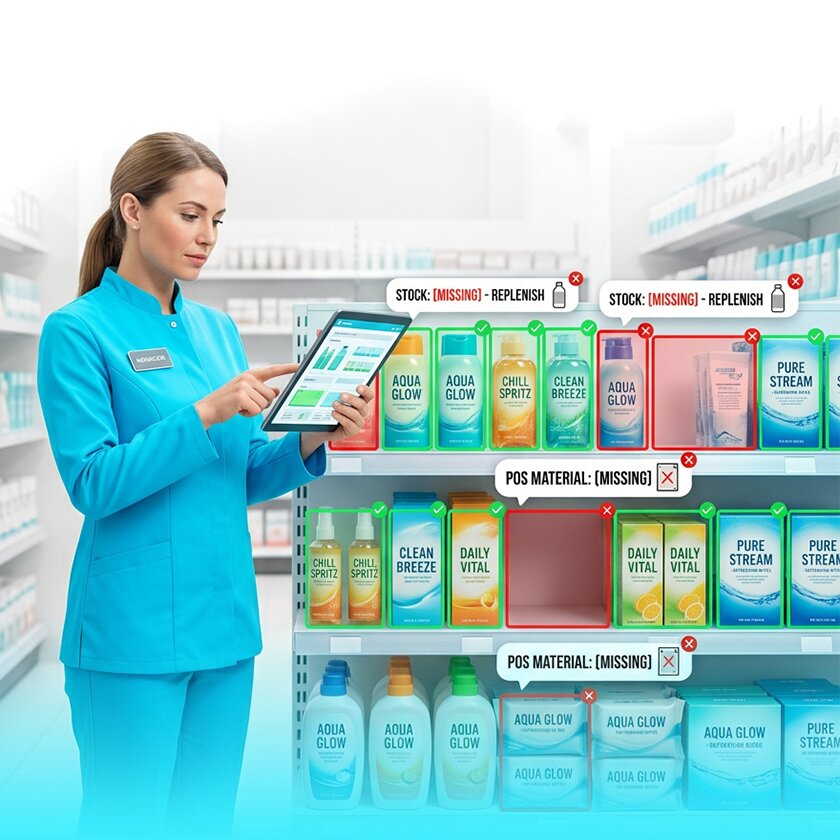
The gap between a head-office plan and what sits on a real shelf is what data and AI now close. Leading retailers run cross-merchandising as one connected process rather than a set of separate steps.
End-to-End Orchestration: From HQ Concepts to Store-Level Execution
End-to-end orchestration means an idea moves cleanly from the planning team to the shop floor and back. The idea becomes a planogram, the planogram becomes tasks for the field team, the work is checked, and the results feed fixes for the next cycle. Nothing falls into a gap between teams.
Agentic AI for Planning and Optimizing Cross-Merchandising
AI agents now help with the pairing decisions themselves. By reading sales and shopper behavior, they find combinations a human planner might miss and show which pairings suit a specific store. Instead of one national plan, the system proposes a version tuned to each location’s actual sales pattern.
Computer Vision for Monitoring Cross-Merchandising Displays in Real Time
Computer vision keeps the plan honest on the shelf. From a photo of a display, it checks whether every element is present, whether the products sit in the right place, whether the point-of-sale materials are up, and whether the result matches the plan. The check runs fast and consistently, without a supervisor reviewing each photo by hand.
Hyper-Localized Cross-Merchandising Strategies by Store
Planning and monitoring together give you hyper-local execution. A store in a student area runs different cross-merchandising sets than a store serving an older population a few miles away. Store format, local shoppers and local events all shape the mix, and the data shows whether each local version is working.
How Goods Checker Helps Retailers Manage and Optimize Cross-Merchandising
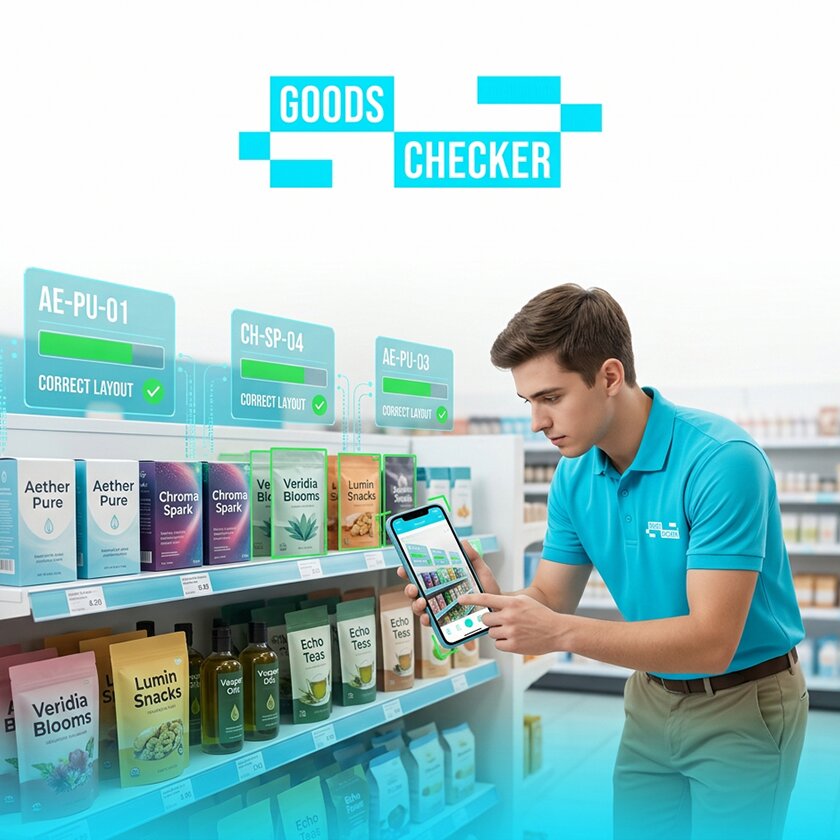
This is where Goods Checker fits into the picture. It works like a lens on execution, turning shelf photos into a clear read on which cross-merchandising displays are working and which are just taking up space.
Photo-Based Monitoring of Cross-Merchandising Execution
A field rep photographs the display. Goods Checker recognizes products at the SKU level with over 95% accuracy and checks the display against the plan, showing whether the cross-merchandising set is present, whether the products are placed correctly, and whether the display is fully stocked. Processing a photo takes under 30 seconds.
Connecting Cross-Merchandising Execution with Shelf KPIs and Sales Data
Execution data matters when it connects to results. Goods Checker links what is on the shelf to the KPIs that matter, including on-shelf availability, share of shelf and planogram compliance, and feeds analytics that managers can read by store, brand and employee. Tied to basket size and cross-sell figures, this shows which pairings drive incremental sales and which do not.
From Manual Audits to Data-Driven, Always-On Optimization
The shift is clearest in a before-and-after comparison. Before, a merchandiser spent close to an hour per store on reporting, and head office saw a partial picture days later. With Goods Checker, one merchandising agency cut reporting time by 70%, cut audit time to about 20 minutes per store, and scaled the system to more than 4,500 outlets while holding recognition accuracy above 95%. Manual spot checks become continuous, data-backed monitoring.
Common Cross-Merchandising Mistakes and How to Avoid Them
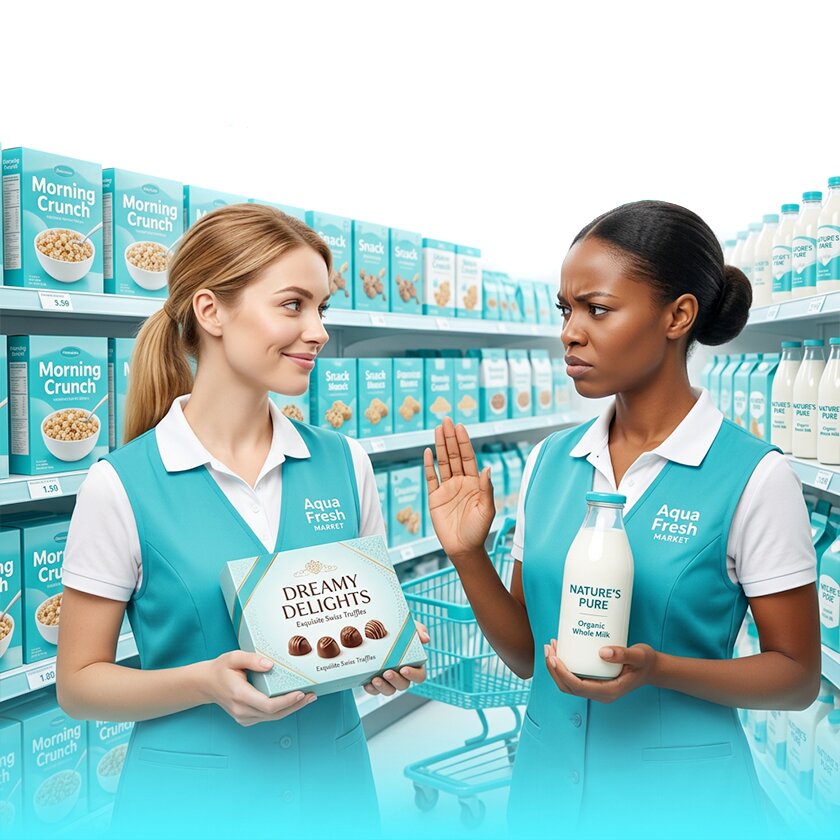
A few mistakes come up again and again, and all of them are avoidable.
- Too many SKUs. Overloading a display turns a clear occasion into visual noise. Keep the set tight and the theme obvious.
- Illogical pairings. Combinations that ignore real shopper behavior read as filler. Base pairings on what shoppers actually buy together, not on what happens to be in stock.
- No measurement. A display that is never measured against a baseline cannot be improved. Track basket size, attach rate and sales lift from the start.
- Stale, year-round displays. A cross-merchandising set that never changes loses its pull. Refresh by season, event and local context.
Cross-Merchandising That's Creative and Measurable
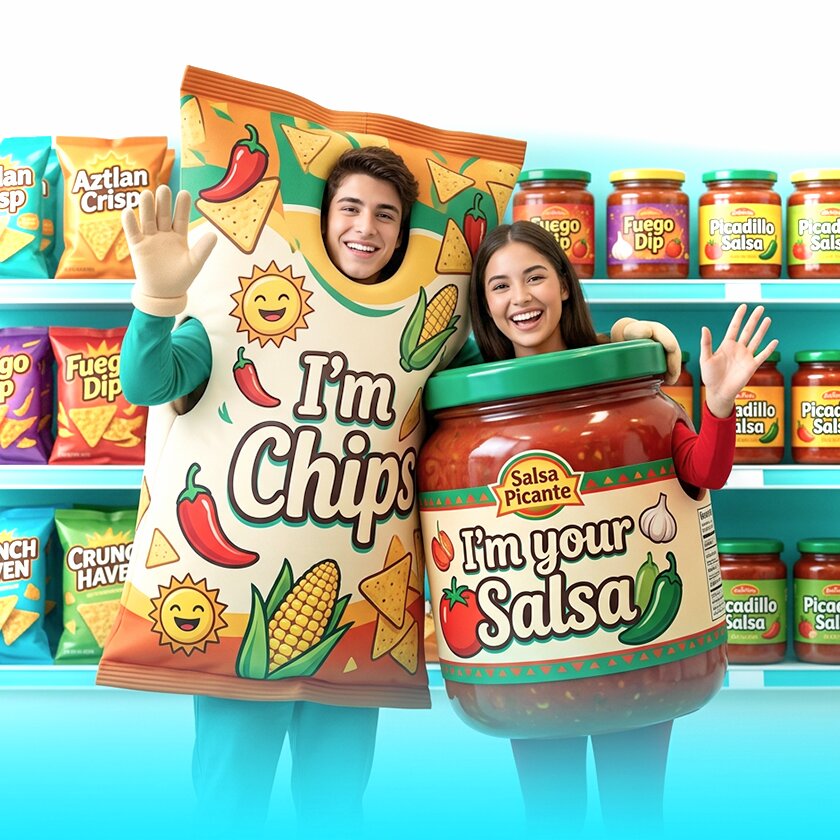
Cross-merchandising still works because it serves a real shopper need at almost no cost. The chips still sell more with the salsa beside them. What separates a strong program from guesswork is whether the retailer can see what actually happened on the shelf and tie it to sales.
In 2026, the teams that win combine the creative side with data, computer vision and AI. They plan pairings from real shopper behavior, run them store by store, and check execution instead of assuming it. Goods Checker supports that work by making cross-merchandising visible and measurable, so a good display idea becomes a result you can track rather than a story told after the fact.
FAQ: Cross-Merchandising Basics
What is cross merchandising?
It is placing complementary products together so shoppers see a ready-made combination and add more to the basket, for example chips next to salsa.
What is cross merchandising in retail?
In retail it means breaking the strict category layout to group products by shopper occasion, both on physical displays and in online “frequently bought together” recommendations.
What is an example of cross merchandising in a grocery store?
A pasta night display with pasta, sauce, parmesan and garlic bread in one spot, or tortillas grouped with salsa and beans for taco night.
How is cross merchandising different from traditional merchandising?
Traditional merchandising organizes the store strictly by category, while cross-merchandising mixes categories on purpose to match a shopper mission and make buying easier.
How can retailers measure cross merchandising performance?
By tracking basket size, cross-sell or attach rate, and incremental sales lift against a baseline, supported by in-store behavior data and reliable execution checks across stores.