

Walk into a supermarket on a busy Saturday morning. The shelves look full, the promo displays are up, and every price is tagged. To a shopper this is just a store doing its job. To a retailer or an FMCG brand, every detail is the result of dozens of decisions about what goes where, in what quantity, at what price, and next to what.
That is merchandising, and the visible part of it is making products easy to find and easy to pick up. Most of the work happens earlier, when teams choose the assortment, build planograms, set prices, plan promotions, brief field staff, and then check that the plan actually reached the store.
In this article we will look at what merchandising means in retail, what merchandisers do day to day, the main types of merchandising, the principles that still work, and how data, KPIs, computer vision and AI are changing the job in 2026.
Table of Content:
- Key Takeaways
- What Is Merchandising in Retail?
- What Is Merchandising All About? Goals, Roles and Daily Work
- Types of Merchandising in Retail
- Key Components of a Successful Merchandising Plan
- Basic Merchandising Principles That Still Work
- Benefits of Effective Merchandising for Retailers and Brands
- Common Merchandising Challenges in 2026
- Merchandising in the Retail Execution Ecosystem
- How Merchandising Works in 2026: Data, KPIs, Automation and AI
- How Goods Checker Helps Retailers and Brands Bring Merchandising Plans to Life
- Merchandising as the Bridge Between Strategy and the Shelf
- FAQ
Key Takeaways

- Merchandising covers assortment, pricing, placement, stock levels, and planogram execution. Visual display is only the part shoppers see.
- Plans break at the shelf. A planogram written in May can be ignored in 40% of stores by August, and the category sales drop only surfaces at the autumn review.
- Empty shelves remain the largest execution loss. For example, a 2026 Retail Economics audit of more than 100 UK stores put average on-shelf availability at 89.7%, with 82% of stores missing at least one item from a standard weekly shop and £2.1 billion (about $2.8 billion) of grocery sales at risk each year.
- Manual audits cannot cover thousands of stores consistently. Computer vision reads a shelf photo in about 30 seconds and puts OSA, OOS, and compliance data in front of managers within hours of the visit.
What Is Merchandising in Retail?

Merchandising in simple terms means managing how products are presented, priced, and made available in a store, so shoppers find what they need and the business sells more. It covers what sits on the shelf, where it sits, how much of it is there, and how clearly the price and the promotion come across.
Merchandising covers more than visual display. It includes assortment planning, pricing, promotion design, stock levels on the shelf, planogram standards, and the KPIs that measure how well teams execute all of this. A retailer can have the right product, the right shopper, and the right price, and still lose the sale if the item sits hidden on a bottom shelf or runs out before the shopper walks in.
What does merchandising mean in retail in practice? It means the commercial plan reaches the shelf in a form the shopper can see, reach, understand, and buy.
What Is Merchandising All About? Goals, Roles and Daily Work

Merchandising connects the retailer, the brand, and the shopper. The merchandiser’s job is to make those three sets of interests line up on the shelf.
Core Goals of Merchandising
Visibility and accessibility. Products that shoppers cannot see or reach do not sell. A category leader buried at ankle level will lose to a smaller brand placed at eye level.
Sales and margin. Every centimeter of shelf has a cost. Merchandising fills that space with the assortment, facings, and price points that bring the highest return for the category.
Brand experience. A clean, well organized shelf signals quality. A messy one signals neglect, even when the products themselves are fine. Merchandising protects the brand at the moment of purchase.
What Do Merchandisers Actually Do in a Store?
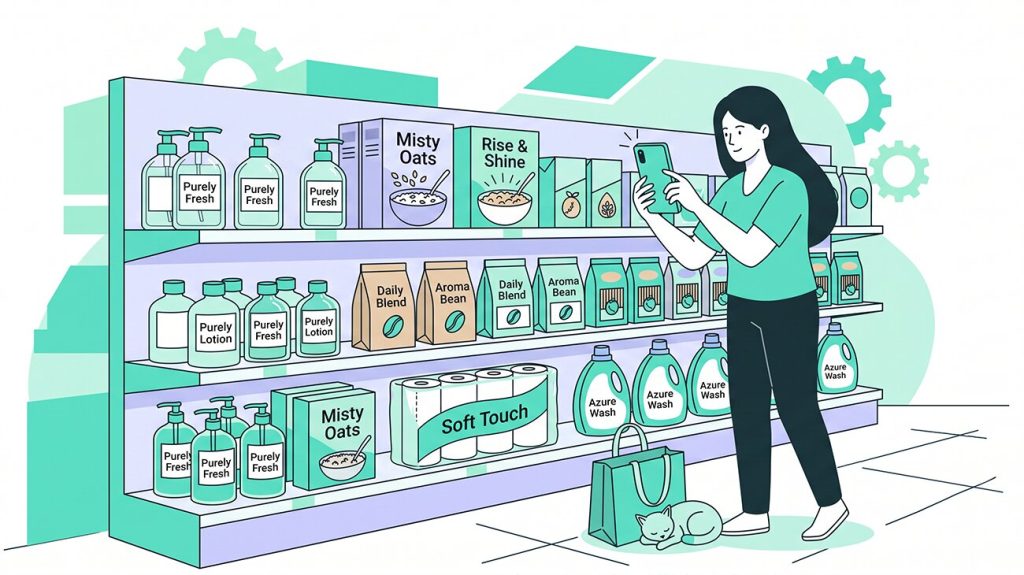
A typical day for a field merchandiser starts with a route of perhaps ten outlets. At each store they walk the assigned categories, check planogram compliance, refill empty facings, fix misplaced products, update price tags, and put up promotional materials when a campaign is running.
They also photograph the shelves, send the images to a supervisor, and fill in a report for headquarters. Historically this happened on paper or in spreadsheets. Today it more often runs through a mobile app, with photos analyzed by computer vision rather than reviewed by hand.
Merchandising as Part of Retail Execution
Merchandising is one piece of a wider discipline called retail execution. Retail execution covers everything that has to happen in a physical store for a commercial plan to reach the shopper, including distribution, pricing, promotion, planogram compliance, POSM placement, and field visit coverage. Merchandising is the part that lives on the shelf and around it, and it is usually where the gap between strategy and the store shows up.
Types of Merchandising in Retail

Different types of merchandising solve different problems. A C-level reader does not need to memorize every form, but knowing the main categories helps when planning resources, setting KPIs, or buying technology.
Product Merchandising
Product merchandising is the work of deciding what range goes on the shelf and in what quantities. It covers assortment depth and breadth, the role of each SKU in the category, and how many facings each product gets.Shampoo is a clear example. A category built on three price tiers, from a private label option to a mainstream brand to a premium one, gives shoppers a way to trade up and gives the retailer both traffic and margin from the same shelf.
Visual Merchandising
Visual merchandising is the part most people picture when they hear the word. It includes window displays, mannequins, signage, color blocking, lighting, and the overall look of the selling floor. In fashion and beauty retail it carries a lot of weight. In FMCG it matters less than planogram compliance and stock levels, but it still affects shopper perception.
Retail / In-Store Merchandising
In-store merchandising is the daily discipline that keeps a shelf in shape. Facings are filled, products are rotated so the oldest stock sells first, price tags match the system, and the planogram is respected. Without this layer, even a brilliant assortment plan falls apart within a week.
Promotional Merchandising
Promotional merchandising covers temporary placements that support a campaign. Endcaps, pallet displays, secondary placements at the entrance, and themed zones for holidays all belong here. Promo execution often fails not because the campaign was bad, but because displays went up late, in the wrong stores, or with the wrong products.
Cross-Merchandising
Cross-merchandising places complementary products next to each other so shoppers buy both, for example pasta with sauce, beer with chips, razors with shaving cream. We covered this in detail in our cross-merchandising guide, so this article will not go deep on it. Cross-merchandising lifts basket size when the pairings reflect real shopper behavior, and it falls flat when they are forced.
E-commerce merchandising exists as a separate discipline and follows different rules, but this article stays focused on brick-and-mortar.
Key Components of a Successful Merchandising Plan

A merchandising plan that works in the real world has several moving parts. Skipping any of them creates a gap that shows up later as lost sales or wasted space.
Product Selection and Assortment Planning
Assortment planning decides which SKUs make it onto the shelf. Each product gets a role, for example, a traffic driver, a margin builder, or a destination item. Decisions here shape everything that follows, because no execution can fix a wrong assortment.
Pricing and Promotion Strategy
Pricing and promotion belong to merchandising, even though they sit close to marketing. Shelf prices, multipacks, bundles, and discount mechanics work together with placement and facings. A product priced 10% above the segment average will not sell faster just because it has more facings.
Inventory Management and On-Shelf Availability
A shelf that runs empty does not sell. On-shelf availability, or OSA, measures how often a product is present when a shopper looks for it, and out-of-stock, or OOS, measures how often it is missing. ECR research puts the share of out-of-stock incidents that end in a real lost sale at 43%, since the shopper either buys the item at another store or buys nothing at all.
Planograms and Visual Merchandising Standards
A planogram is the blueprint for a shelf. It says which SKU goes where, how many facings each one gets, and how the category flows from left to right. The hard part is not designing planograms, but making sure stores actually follow them.
Performance Monitoring and Optimization
A merchandising plan without measurement is a guess. Performance monitoring tracks sales by category and SKU, shelf KPIs such as compliance and share of shelf, and store-level execution data. The point is to find what works, fix what does not, and update the plan on a regular cycle.
Basic Merchandising Principles That Still Work

The technology around merchandising has changed dramatically. The underlying principles have not. A handful of basic ideas still drive most of what good merchandising looks like.
Right product, right place, right time, right price. This four-part rule is older than most retail tech, and it still holds. If any of the four is wrong, the sale leaks somewhere.
Eye-level is buy-level. Products placed at adult eye height sell faster than those at the top or bottom of the unit. The rule comes with caveats, for example, children’s products live lower because they target child eye level, but the principle drives most planogram logic.
Logical adjacency and clear navigation. Shoppers should be able to find a category and move through it without thinking. Clean signage, predictable flow, and grouping by use case all help. Visual clutter and competing messages on the shelf do the opposite.
Match local shopper missions. A convenience store and a hypermarket serve different missions even when they carry similar products. A store designed for quick top-up trips needs different placement, pack sizes, and pricing from one designed for the weekly shop.
Benefits of Effective Merchandising for Retailers and Brands

Done well, merchandising shows up in numbers a CFO recognizes. Done badly, it shows up as a slow leak nobody can quite trace.
Higher Sales and Revenue per Store and per Shelf
Better placement and consistent availability lift conversion at the shelf and increase basket size through cross-merchandising. The same store, with the same assortment, can produce different revenue depending on how well merchandising is executed.
Better Customer Experience and Store Perception
Shoppers spend less time searching and more time buying. A well merchandised store feels easier to shop, even when the customer cannot articulate why.
Stronger Brand Visibility and Positioning
For brands, the shelf is the largest media surface they own. Strong merchandising means more eye-level facings, better adjacency to category leaders, and consistent appearance across stores. This compounds with advertising rather than competing with it.
More Efficient Use of Space and Stock
Every linear meter of shelf carries a cost in rent, labor, and tied-up working capital. Effective merchandising removes dead space, retires slow movers, and shifts space toward products that earn it. Retailers using disciplined space planning typically see 5–10% improvements in sales per square meter.
Common Merchandising Challenges in 2026

The basics have not changed, but the operating context has. Several pressures show up in almost every merchandising conversation this year.
Keeping Up with Changing Shopper Behavior and Trends
Shoppers shift faster than planograms. A new health trend, a viral product, a price-sensitivity wave triggered by inflation, any of these can change demand in weeks. Merchandising teams that update plans quarterly are now behind the curve.
Data Overload and Fragmented Systems
Retailers and brands have more data than ever, including sales, loyalty, traffic, shelf photos, and price scrapes. The problem is that this data sits in different systems and rarely tells a single coherent story. The result is paralysis, where teams know something is wrong but cannot pinpoint where.
Limited Visibility into Real Shelf Execution
Headquarters writes the merchandising plan. Stores execute it, or do not. Between field visits, nobody at HQ really knows what the shelf looks like.A planogram designed in May can go unfollowed in most stores by August, and the first warning sign is a category sales drop in the autumn review.
Manual Store Visits and Inconsistent Audits
Manual audits are slow, expensive, and subjective. Two auditors looking at the same shelf can produce different scores. Scaling manual coverage across thousands of outlets is rarely viable, so most chains rely on a sample that may or may not reflect reality.
Merchandising in the Retail Execution Ecosystem

Merchandising sits inside a wider system of standards, KPIs, and operations that connects strategy to the store.
Merchandising Standards and KPIs
Standards define what good looks like, for example, planograms, facing counts, POSM placement rules, and shelf-cleanliness norms. KPIs measure how close reality gets to those standards. The common ones are planogram compliance, on-shelf availability, out-of-stock rate, share of shelf, promo compliance, and price-tag accuracy.
How Merchandising Connects to Retail Execution and Store Operations
Field sales teams, store operations, supply chain, and trade marketing all touch merchandising. If supply chain misses a delivery, the shelf goes empty. If trade marketing books a promo but the store does not get the materials, the campaign underperforms. Merchandising is where these handoffs either work or visibly break.
How Merchandising Works in 2026: Data, KPIs, Automation and AI

The job description of a merchandiser has not changed. What has changed is the tooling and the speed of feedback.
From Gut Feel and Visual Checks to KPI-Driven Decisions
Ten years ago, planogram updates relied on a category manager’s experience plus a quarterly sales report. Today, leading FMCG teams update planograms based on weekly sales by SKU, by store cluster, combined with shelf-execution data. Gut feel still matters at the edges, but the baseline is moving to numbers.
Computer Vision and AI-Powered Shelf Analytics
Computer vision reads a shelf photo and turns it into structured data. From one image the system can extract which SKUs are present, how many facings each has, whether the layout matches the planogram, and whether price tags are correct. AI layers on top look for patterns across thousands of stores and surface what a human analyst would miss.
The shift this creates is in feedback speed. A shelf problem that used to surface three weeks later in a sales report now shows up within hours of the visit.
Always-On Monitoring vs. Occasional Store Visits
A traditional audit looks at a store maybe twice a month. Computer vision turns every merchandiser visit, every employee photo, and in some cases every fixed camera frame into a data point. The result is something closer to continuous monitoring than to periodic auditing, and it changes how headquarters reacts to execution problems.
How Goods Checker Helps Retailers and Brands Bring Merchandising Plans to Life

Goods Checker is a SaaS platform built around computer vision for retail execution. The role in a merchandising plan is to make sure what was designed at HQ shows up on the shelf, and to give teams the data to keep improving.
Turning Merchandising Standards into Digital Tasks and Checks
Planograms, facing rules, POSM placement standards, and price-tag accuracy targets all become structured tasks inside the app a merchandiser carries. Each store visit follows the same logic, with the same checks, no matter who runs it. This removes the inconsistency that hurts manual audits.
Using Computer Vision to Measure Real Shelf Execution
A merchandiser photographs the shelf. The image goes to Goods Checker servers, where algorithms recognize products at SKU level and compare what they see against the planogram. Processing takes around 30 seconds per photo. The output is OSA, OOS, share of shelf, planogram compliance, and other shelf KPIs broken down by store, brand, and employee.
“For example, a Ukrainian merchandising agency working with major FMCG manufacturers cut merchandiser reporting time by around 70%, with store audits running 10 to 50% faster depending on outlet size. After a pilot in 6 cities, 45 chains, and 694 outlets, the service scaled to more than 4,500 stores across the country.”

Linking Shelf KPIs to Sales and Continuous Improvement
Shelf data on its own is useful. Shelf data combined with sales is where decisions get made. When teams see that planogram compliance correlates with a 5–8% sales lift in a category, the conversation moves from compliance for its own sake to compliance as a revenue lever. Goods Checker plugs into existing IT systems through API, so shelf KPIs land where the rest of the commercial data already lives.
Merchandising as the Bridge Between Strategy and the Shelf

Merchandising is the bridge between what a company plans and what a shopper sees. The strategy lives in spreadsheets and slide decks. The shelf lives in the store. Merchandising is everything that has to happen for one to match the other.
The basic principles still hold, including right product, right place, right time, right price. What has changed is the speed at which retailers and brands can see what is happening on the shelf, and the precision with which they can react. Teams that combine classic merchandising discipline with data, KPIs, computer vision, and AI consistently outperform teams that rely on quarterly audits and gut feel.
Goods Checker exists to make that bridge transparent and manageable, so the gap between the merchandising plan and shelf reality stays small enough to act on.
FAQ
What is merchandising in simple terms?
Merchandising is the work of deciding what products go in a store, where they sit, in what quantity, and at what price, then making sure the plan is executed on the shelf. The goal is that shoppers find what they need and the business sells more.
What does merchandising mean in retail?
In retail, merchandising means managing assortment, pricing, placement, stock on the shelf, planograms, and promotional execution so that the commercial plan reaches the shopper.
What is the purpose of merchandising?
The purpose is to lift sales and margin by making the right products visible, available, and well presented at the right price, while protecting the brand and the shopper experience.
What are the main types of merchandising in retail?
The main types are product merchandising, visual merchandising, in-store or retail merchandising, promotional merchandising, and cross-merchandising. Each covers a different layer of the same job.
How does visual merchandising fit into overall merchandising?
Visual merchandising is one piece of the wider discipline. It deals with the look of the store and the shelf. Other parts of merchandising deal with assortment, pricing, stock, and execution standards.
How is merchandising changing with data and AI?
Decisions are shifting from experience-based to data-based. Computer vision turns shelf photos into KPIs in minutes, AI analytics finds patterns across thousands of stores, and feedback loops that used to take weeks now run in hours.