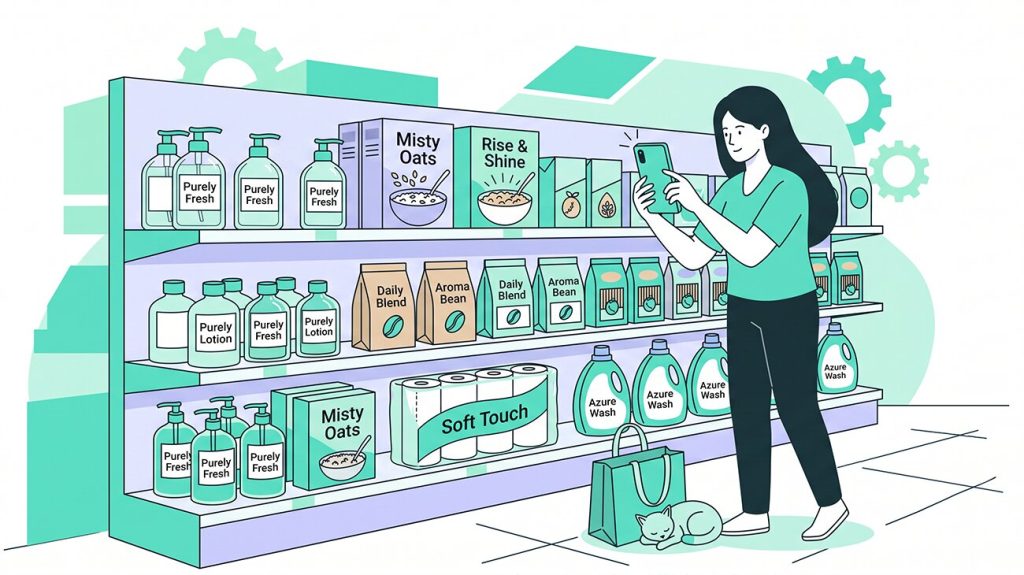


Perfect Store programs have been part of FMCG strategy for over two decades. Yet research consistently shows that fewer than one in five companies execute them consistently at scale. This guide breaks down what Perfect Store actually means, why most programs stall, and what it takes to close the gap between the plan and the shelf. Let’s look at why the Perfect Store matters more than ever.
Walk into any supermarket and look at the shelves. That quiet battle for shelf space, visibility and compliance is one most shoppers never notice, but every brand manager knows all too well.
The Perfect Store concept was built to win that battle systematically. It is a defined set of measurable in-store standards covering assortment, placement, pricing and promotion that, when executed consistently, maximize sales at the point of purchase. Think of it as the “picture of success” for your product across every shop, every retail chain, every day.
With shoppers making up to 80% of purchase decisions in-store, getting the shelf right is a core revenue driver. And yet the vast majority of FMCG companies never achieve Perfect Store at scale. The strategy lives in headquarters decks. The shelf reality is often a very different story.
Table of Contents
- What Is a Perfect Store? Definition and Origin of the Concept
- The Concept of a Perfect Store in FMCG: From Shopper to Shelf Standards
- Benefits of a Perfect Store for FMCG Manufacturers and Retailers
- Why 80% of FMCG Companies Never Reach Their Perfect Store
- The Six Ps of Perfect Store Execution
- From Concept to Reality: Building a Data-Driven Perfect Store Program
- How Advanced Analytics, Computer Vision and SaaS Tools Change Perfect Store Execution
- Practical Steps to Avoid Being in the 80% That Never Achieve a Perfect Store
- Perfect Store Is Not a Destination, but a Discipline
What Is a Perfect Store? Definition and Origin of the Concept

The term “Perfect Store” emerged in the early 2000s as major CPG companies began formalizing their approach to retail execution. Unilever, P&G and Coca-Cola, working alongside consultancies including Bain, began developing structured frameworks to translate marketing strategy into consistent shelf reality across global retail networks.
The concept moved beyond the classic 4P marketing mix and evolved into more comprehensive models, including the Six Ps framework covered below. The goal was simple: define what “ideal” looks like for every SKU in every channel and store format, then measure how close reality gets to that ideal.
What makes Perfect Store distinct from good merchandising is strict KPI linkage, systemic repeatability and network-level scale. A well-stocked shelf in one store is not a Perfect Store. A consistently delivered shelf standard across an entire retail network is.
The Concept of a Perfect Store in FMCG: From Shopper to Shelf Standards

Perfect Store strategy starts at the shopper’s moment of truth. When a consumer stands in front of the category shelf, can they easily find the right product, in the right format, at the right price, with the right promotional signal? Every element of Perfect Store design flows from this logic. The specific standards vary by brand, category and channel, but the underlying approach is universal: define, measure, execute, improve.
Shopper-Centric View: Designing the Ideal Shelf Experience
Shoppers decide within seconds whether a product is findable and relevant. A cluttered shelf, a missing price tag or an empty promotional display each cost real sales, and none of these failures show up automatically in a KPI dashboard. When execution is designed from the shopper’s perspective, it becomes a marketing function, not just a logistical one.
The Six Ps Behind Every Perfect Store
- Product — the right assortment, the right SKUs for each store format, zero out-of-stocks on core lines.
- Pricing — accurate on-shelf pricing, promotional mechanics clearly communicated, perceived value aligned with brand positioning.
- Place — correct shelf positioning, sufficient facings, eye-level placement for priority SKUs, secondary displays where agreed.
- Promotion — POSM materials in place, display units activated, promotional mechanics live and visible in store.
- People — trained field teams, motivated merchandisers, store staff aligned to category standards.
- Process — regular audit cadence, defined correction workflows, continuous improvement built into the operating model.
Each of the Six Ps depends on the others. A well-placed product with a missing price tag loses. A perfect promotion with the wrong assortment goes to waste.
What this means for you: Your Perfect Store standard is only as good as the shopper experience it creates. If a customer cannot find your product within seconds, the standard has failed regardless of what the planogram says.
Start by walking your own category shelf as a shopper, not as a brand manager. What you notice will tell you more than any compliance report.
Benefits of a Perfect Store for FMCG Manufacturers and Retailers

When executed consistently, Perfect Store programs deliver measurable impact across three areas: sales growth, shopper experience and stronger retail partnerships.
Improved In-Store Presence and On-Shelf Availability
An out-of-stock does not just mean a lost sale — it often means a lost shopper who switches brands entirely. Perfect Store programs create the discipline to monitor OSA systematically and close gaps before they become chronic.
Significant Sales Uplift and Better ROI on Trade Spend
Without execution discipline, a significant share of trade investment delivers zero return. The promotion runs but the display is never built. The price mechanic is agreed but the shelf tag is wrong. Industry research estimates that compliance failures account for 20% to over 40% of promotional activities in any given period. Perfect Store KPIs connect trade spend directly to shelf reality, making it possible to measure what actually ran and reallocate budgets toward what works.
Stronger Collaboration with Retail Partners
Manufacturers who bring data-driven Perfect Store KPIs to retail conversations operate from a position of strength. Rather than debating subjective impressions, both sides can align on shared facts: planogram compliance rates, share of shelf, promotional execution scores, OSA by store cluster. That transparency builds trust and opens doors to joint growth initiatives.
What this means for you: Map each benefit to a KPI you currently track. If you cannot measure it, you cannot manage it.
Pick one benefit — OSA, trade ROI or retail partnership quality — and define what “good” looks like in numbers before moving to the next.
Why 80% of FMCG Companies Never Reach Their Perfect Store

If the concept is so well-established and the benefits so clear, why do most companies fall short? Not because of a weak strategy, but because of what happens between the headquarters deck and the actual shelf across thousands of stores.
According to NielsenIQ,only 20–30% of new SKUs achieve sustained distribution within six months, meaning that up to 70–80% fail — primarily due to execution gaps rather than product issues. The primary driver is not the product itself but in-store execution failures: wrong positioning, insufficient facings, out-of-stocks, missing POSM. If your last product launch underperformed, check the shelf data first. The answer is usually hiding in execution gaps that nobody measured at the time.
Overemphasis on Planning, Underinvestment in Daily Execution
Companies invest months developing Perfect Store frameworks. The planning process is thorough. But the tools, processes and feedback loops that translate those plans into daily shelf reality receive a fraction of that investment. Field teams are handed complex presentation decks and expected to deliver results across hundreds of stores per week. Without the right tools, that is simply not realistic at scale.
Fragmented Data and Lack of Real-Time Shelf Visibility
Most companies have plenty of sales data. What they lack is visibility into what is actually happening on the shelf. Manual field audits happen infrequently, vary widely in quality and produce reports that arrive days or weeks after the fact. By the time a compliance issue surfaces in a PowerPoint, the promotional window has closed.
Complex KPIs and Misalignment Between Sales, Marketing and Field Teams
Perfect Store programs often generate too many KPIs, and each function tracks what matters most to them. No single team owns the complete picture, and the result is that Perfect Store becomes everyone’s second priority and no one’s first.
Manual Audits and Limited Field Capacity
A merchandiser visits a store, fills in a paper checklist, takes a photo and sends it to a supervisor for manual review. A field team covering 50 stores per week cannot realistically generate, process and act on granular shelf data across all of them. Errors accumulate, priorities blur, and the Perfect Store benchmark quietly drifts into a theoretical aspiration.
What this means for you: Identify which of the four failure points applies to your organization right now. Most companies struggle with more than one.
Start with the one that is easiest to fix, build a visible win around it, and use that momentum to tackle the next.
The Six Ps of Perfect Store Execution

Understanding the Six Ps at a conceptual level is useful. Translating them into operational standards is where Perfect Store programs either take root or collapse.
Product: Assortment, OSA and Category Roles
Every SKU in a store should be there for a reason, and that reason should be measurable. Core SKUs drive volume, premium lines drive margin and seasonal products drive basket size. Perfect Store execution requires defining the minimum viable assortment for each store format and monitoring OSA consistently, not just during launch windows.
Pricing: On-Shelf Price, Promotions and Perceived Value
Pricing compliance is harder to maintain than it looks. Price tags go missing, promotional prices fail to update and multi-buy mechanics are communicated inconsistently. Each failure erodes shopper trust over time. Perfect Store pricing standards define not just the price point but how it should be communicated and how frequently it should be checked.
Place: Shelf Layout, Facings and Secondary Placements
Shelf real estate is finite and contested. Perfect Store execution defines exactly where products sit within the category, how many facings each SKU receives and where secondary placements are activated. Planogram compliance is the core KPI, but it is only meaningful if measured consistently, not just during planned store visits.
Promotion: POSM, Displays and Retail Media In Store
In-store promotion is where the gap between plan and reality is most visible. POSM materials arrive late, display units go unstocked, promotional mechanics are active online but missing from the physical shelf. Perfect Store standards treat promotional execution as a measurable KPI with defined compliance thresholds, not a best-effort activity.
People: Field Teams, Merchandisers and Store Staff
Field teams, merchandisers and store staff are the operational backbone of any Perfect Store program, but they need clear priorities, simple tools and timely feedback. Execution standards should translate into practical daily playbooks: which stores to visit first, what to check, what to fix, what to photograph. Some companies supplement their field force with crowdsourcing models to extend geographic reach quickly, though data quality and consistency tend to suffer compared to a dedicated trained team.
Process: Governance, Cadence and Continuous Improvement
Perfect Store is not a project with a launch date. It is an operating model with a continuous improvement cadence. Audit frequency, correction workflows and KPI review cycles all need to be embedded into the regular rhythm of the commercial organization.
What this means for you: Run a quick audit of your current program against each of the Six Ps. The weakest one is almost always where your execution gap lives.
Score each P from one to five and focus your next quarter on the two lowest-scoring areas.
From Concept to Reality: Building a Data-Driven Perfect Store Program

Understanding the concept is one thing. Building a program that delivers results in the field is another. Here are the three foundational steps that separate companies that execute from those that only plan.
Defining Your Picture of Success and Perfect Store KPIs
Define the minimum set of KPIs that matter most: OSA rate, planogram compliance, share of shelf, promotional execution score. Keep the list manageable. A program with 40 KPIs is a program where nothing gets prioritized.
Translating Standards into Simple Field Playbooks
Every Perfect Store standard needs to translate into a practical field playbook: which SKUs to check in which order, what a compliant shelf looks like in a photograph, what action to take when a gap is found. The simpler the playbook, the higher the compliance rate.
Closing the Loop with Continuous Measurement and Feedback
Measurement without feedback is reporting. Perfect Store programs that sustain results build in fast feedback cycles: field data collected today generates corrective actions tomorrow, not next quarter.
What this means for you: If your field teams still rely on spreadsheets and manual checklists, the gap between your Perfect Store plan and shelf reality will persist.
Translate your standards into a one-page field playbook this week and test it in five stores before rolling it out further.
How Advanced Analytics, Computer Vision and SaaS Tools Change Perfect Store Execution

From Lagging Store Audits to Real-Time Shelf Data
Computer vision has changed what is possible in retail execution. Image recognition systems can process a shelf photo in seconds and deliver objective KPI data at store and SKU level. Field managers no longer have to wait for the monthly review to discover a compliance issue. They can identify it and act on it the same day.
Automating Merchandising Workflows with Goods Checker
This is precisely where SaaS solutions like Goods Checker enter the picture. Goods Checker is a cloud-based computer vision platform built for FMCG and merchandising operations. Field teams photograph the shelf through the app; the AI engine recognizes products at the SKU level — checking planogram compliance, facings, OSA, and POSM presence — and delivers structured KPI data in near real time.
In a documented pilot with a merchandising agency operating across 694 retail locations in Ukraine, Goods Checker reduced reporting time by 70% — from approximately one hour per store to under 20 minutes. Recognition accuracy exceeded 95%, and the store audit cycle accelerated by 10–50% depending on store size. The project was deployed at scale within two weeks, reaching over 4,500 stores.
For FMCG companies and their field partners, this kind of capability directly addresses the structural problem behind the 80% failure rate: the absence of consistent, objective, timely shelf data. Without it, the Perfect Store remains a plan. With it, it becomes a measurable operational reality.
Turning Perfect Store into an Always-On Operating Model
When shelf data flows in regularly, Perfect Store compliance becomes a daily operational metric rather than a quarterly review topic. Field teams receive prioritized task lists based on actual shelf conditions. Managers can see compliance trends by store, by chain, by region, and intervene where it matters most.
What this means for you: Without real-time shelf visibility, consistent execution at scale is practically impossible.
Audit your current data flow: how old is your shelf data when it reaches the person who needs to act on it? If the answer is more than 48 hours, that is the problem to solve first.
Practical Steps to Avoid Being in the 80% That Never Achieve a Perfect Store

- Start narrow. Pick two or three retail chains and one or two priority categories. Prove the model before scaling.
- Keep your KPI set short. OSA, planogram compliance, share of shelf and promotional execution score cover most of what matters.
- Digitize the shelf audit. Replace paper checklists with photo-based audits processed by image recognition.
- Align team targets. If field teams, trade marketing and sales are measured on different things, alignment will not happen on its own.
- Build a weekly correction cycle. Data that does not drive action within 48 to 72 hours quickly loses its value.
- Update standards regularly. Standards that stay static for more than a quarter are already out of date.
- Choose tools that scale. Platforms with built-in computer vision and mobile-first workflows make consistent data collection realistic across large networks.
Perfect Store Is Not a Destination, but a Discipline

Perfect Store is not a slide with a photo of a flawlessly stocked shelf. It is a daily discipline built on clear standards, consistent measurement and real-time visibility across the entire store network.
The 20% of FMCG companies that consistently get close to their Perfect Store benchmarks are not necessarily bigger or better resourced than the rest. What sets them apart is the ability to translate strategy into shelf reality, store by store, day by day.
In a market where the shelf is still the most powerful point of contact between a brand and a shopper, that ability is not optional.