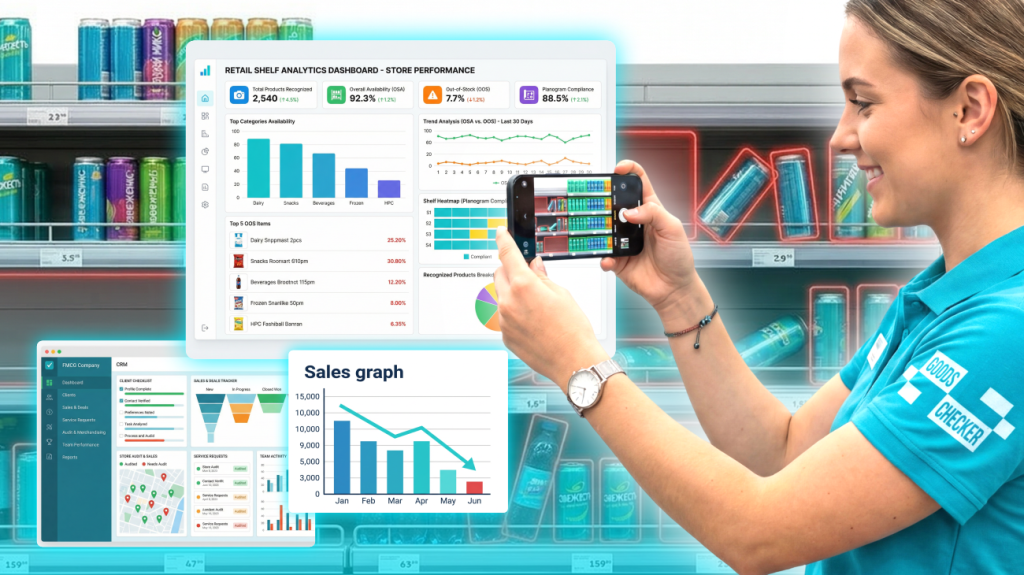


Every day, thousands of cafes and bakeries are forced to throw away unsold food — sandwiches, croissants, fruits, fresh juices. Restaurants and foodservice businesses worldwide lose up to $2.6 trillion annually due to food waste.
Yet every $1 invested in waste reduction returns $14 in savings on purchasing, storage, and disposal of products that get thrown away anyway. Pressure is also mounting from regulators — for example, by 2030, restaurants and cafes in the EU must reduce waste volume by 30%.
But to reduce waste, businesses first need to understand how much product actually remains at day’s end. This is exactly where most cafes struggle.
Table of Сontents
Why Traditional Tracking Doesn't Work
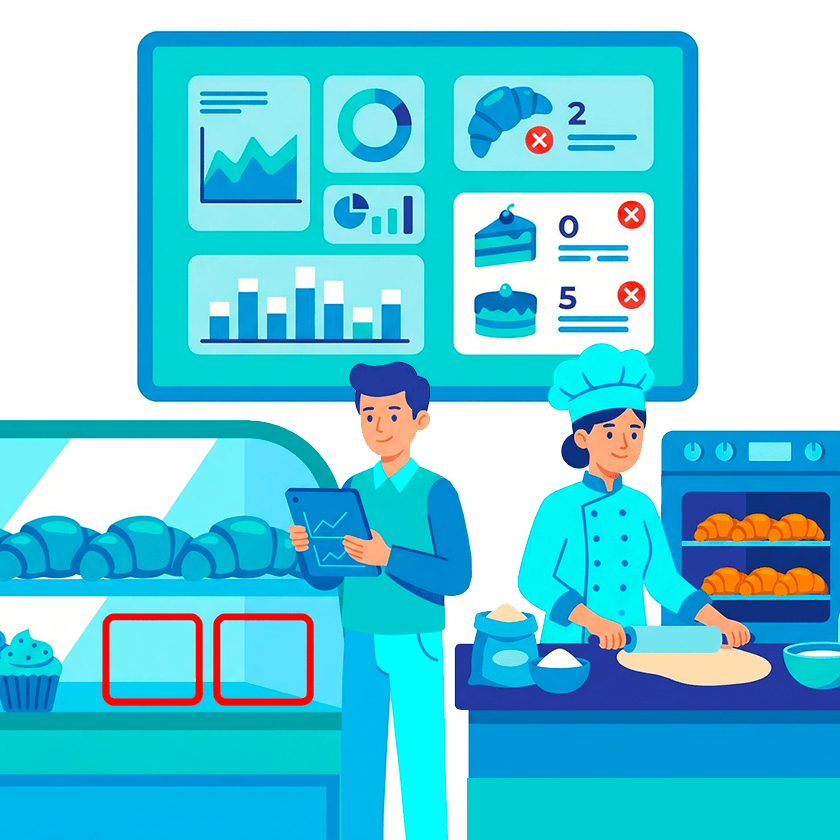
In most cafes, sales tracking is automated. The POS system records every sale, and specialized software like r_keeper deducts ingredients from inventory based on recipe cards. It seems simple to calculate remaining inventory from the difference between what left the warehouse and what sold through the register. But in practice, this formula doesn’t work.
The problem is the system doesn’t see the intermediate step — production. Consider an example. A cook takes flour, butter, and other ingredients from the warehouse and prepares a batch of croissants. But it’s not always recorded how many pieces were made and how many were placed on display. Only that 15 croissants were sold that day is known. The tracking system can’t determine how much finished product remains at shift’s end.
To close this gap, an employee manually counts what’s left on display at day’s end and fills out a disposal form. This form is the basis for official product disposal. Nobody verifies whether the numbers on the form match what actually sat on the shelf before the cafe closed.
This means data accuracy entirely depends on the specific person at shift’s end. The employee may miscount, forget to enter some items, or not count products at all. As a result, disposal form data and actual display inventory often don’t match. For a chain of several dozen locations, this becomes a systemic problem in multiple areas.
Fraud. An employee can take products home and write in the form that they disposed of them. Or simply throw away some products without recording it anywhere. Since there’s no independent data source on how much was actually on display, verifying form numbers is impossible. The company can only discover discrepancies through investigation.
Management blind spots. The company doesn’t understand actual waste volume and doesn’t see patterns. For example, that every Friday evening twice as many croissants remain compared to weekdays, or that a certain item consistently doesn’t sell out. Without this data, decisions about how much to produce and when are made intuitively. The result is either overproduction and excess waste, or empty shelves during peak hours.
Legal risks. In many countries, cafes must transfer waste products to licensed organizations and document this for regulators. If disposal form volume differs from what’s actually transferred for disposal, this is a violation discovered during inspections.
Automatic Inventory Counting: How It Works

One way to solve these problems is automating inventory counting using computer vision. Stationary cameras already installed in cafes capture display conditions in real time.
At shift’s end, the camera automatically takes a final display photo. A neural network analyzes the image and counts how many product units remain in each product category. The system doesn’t always recognize specific items — for example, it won’t determine exactly how many croissants or sandwiches remain, but will say 3 product units remain in the juice zone. Data on remaining product quantity on display is sufficient to verify any disposal form. The result is recorded in the system and immediately becomes available to management.
Throughout the day, cameras also monitor display fullness. But they track not the quantity of specific items, but empty space on displays. When there’s too much empty space, staff receives notification that it’s time to replenish displays.
What Business Gets

Automatic inventory counting solves three challenges that manual tracking can’t handle.
Waste control. Before system implementation, the only data source on inventory was the employee who counted remaining products and filled out the disposal form themselves. Now management has an independent verification point: final display photo data. If numbers don’t match, it’s immediately visible, and this information can always be verified through photo archives. For a chain of several dozen locations, this is fundamental: manually checking each location is impossible, but the system does this automatically every day and highlights discrepancies.
Production optimization. As inventory data accumulates, management starts seeing patterns and understanding which days and times products consistently don’t sell out. With this data, objective decisions can be made to reduce output in final operating hours or adjust purchases for specific weekdays. Researchers estimate that most waste in foodservice establishments comes from overproduction. Without inventory data, this problem can’t even be measured, let alone solved.
Financial return. Establishments implementing AI-based food waste control systems reduce product purchasing costs by an average of 2-8%, while waste volume decreases up to 39% compared to baseline levels. For a chain of several dozen locations, even small improvements in production planning accuracy deliver tangible financial results.
When to Act

Display inventory control technologies are already available and working. For cafe chains, this is one of the fastest ways to reduce losses and start making decisions based on real data rather than feelings.
Most such solutions work on cameras already installed in establishments. New equipment purchases aren’t needed, and POS systems don’t need changing either.
Requirements for documented waste verification are tightening in many countries. Companies building tracking systems now will be ready for new rules before they become mandatory.