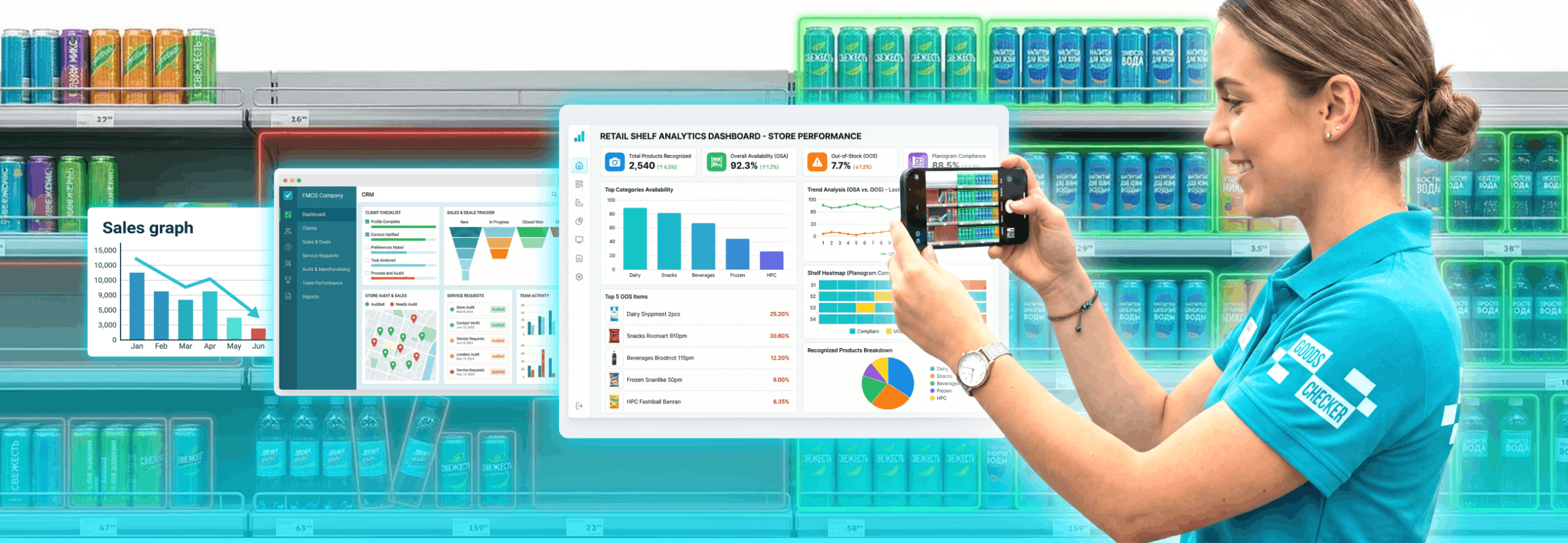

FMCG manufacturers and distributors work with data from multiple sources. CRM systems show sales dynamics and customer relationships, merchandiser reports show shelf conditions at points of sale, analytics dashboards show financial metrics. But this data is often disconnected. A manager sees revenue decline in a region but can’t quickly understand the cause: is it an issue with sales reps’ performance, competitor actions, or simply product unavailability on shelves?
IHL Group research shows that global retail losses from out-of-stock products reach $1.2 trillion annually. For a typical retailer, this represents 4% of lost sales.
- Fragmented sales and display data prevents quick problem response. Integrating shelf audit IT solutions with CRM and BI provides a unified real-time business view.
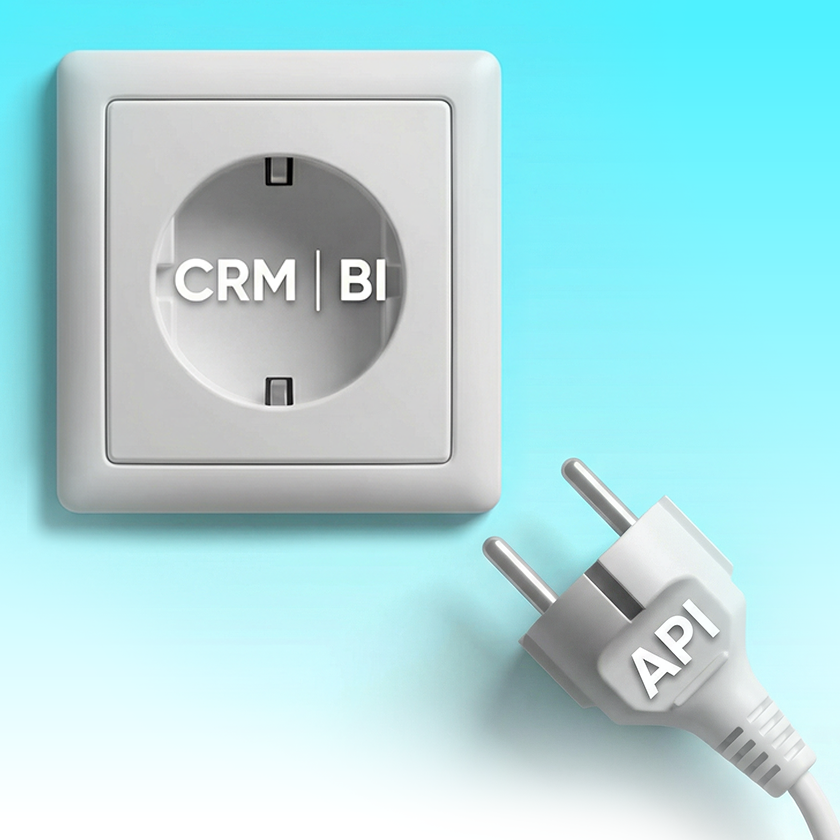
- Shelf audit IT solution integration doesn’t require IT infrastructure overhaul. REST API enables connecting monitoring systems to existing corporate systems in 2-3 weeks.
- Each business type gains specific advantages from shelf audit IT solution integration. Manufacturers control sales rep performance, distributors verify retailer agreement compliance, merchandising agencies automate reporting.
What Problems Does Shelf Audit Integration with CRM Solve
Integrating AI shelf monitoring with corporate systems solves three key challenges for any business.
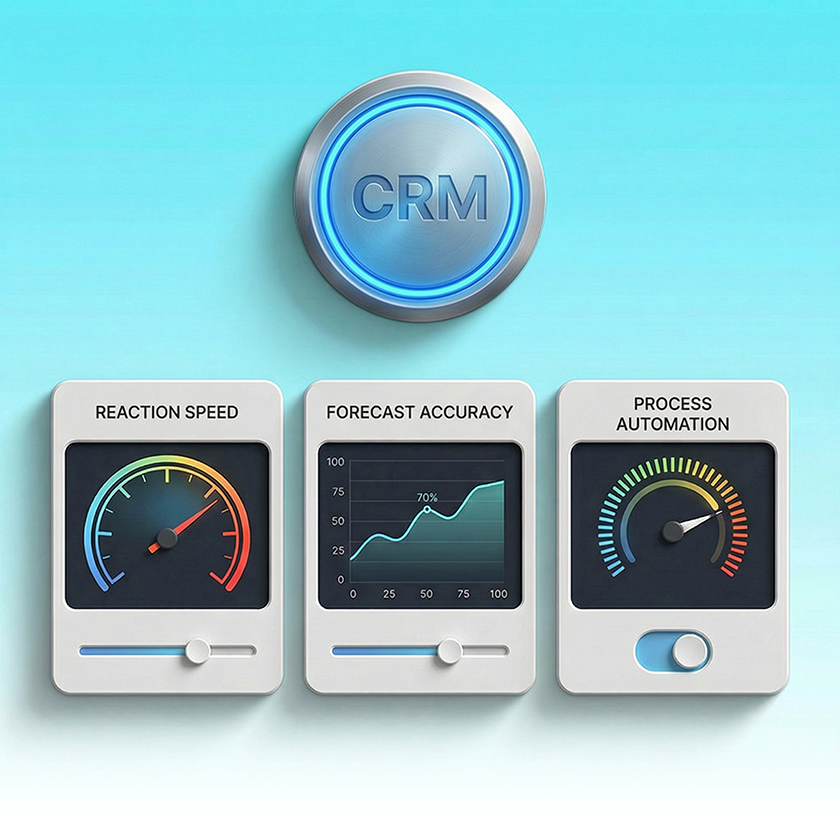
Response speed to problems increases dramatically. Instead of weekly reports, the company gets real-time data and can fix situations the same day. This is especially critical for products with short shelf life or during promotional campaigns, when each day without product on shelves means direct financial losses.
Forecasting accuracy improves through visibility into actual shelf conditions. Analytics are built not only on sales but also on actual product presence at locations. This enables more accurate delivery planning, marketing budget allocation, and sales rep performance evaluation.
Automation of routine tasks frees employees from manual photo report processing and summary compilation. The system automatically recognizes products, checks planogram compliance, and generates reports. Employees can focus on solving problems rather than finding them.
Each business type gets its own specific advantages.
FMCG manufacturers gain direct connection between shelves and team management. Data from photo reports automatically flows into CRM. Management sees sales rep visit plans and actual results at each retail location. If product is displayed incorrectly or missing in several stores consecutively, the system immediately signals the problem. This enables linking promotional investments to actual product shelf presence and avoiding spending on locations where products are absent.
Distributors gain a tool for monitoring retailer agreement compliance. The integrated system shows whether conditions on facing counts, specific shelf placement, or promotional material installation are being met. This data in BI systems allows objective assessment of which chains fulfill obligations and which require renegotiated partnership terms. This enables calculating actual return on investment for each retail location and making decisions based on facts rather than buyer promises.
Merchandising agencies automate client reporting and better control employee work quality. Instead of manually checking hundreds of photo reports and compiling summaries, agencies get ready analytics for each merchandiser, location, and client. CRM integration allows instantly seeing which employees complete tasks with quality and who systematically makes errors. This reduces client report generation time by 60-70% and allows agencies to service more locations with the same staff.
Cafes and HoReCa solve the problem of popular item shortages through display monitoring and management system integration. AI tracks beverage, snack, and other product inventory on displays and in coolers. Data automatically transfers to the management system. When popular item stock on displays reaches minimum, employees receive notifications to replenish displays from storage. If product runs out in storage, the system automatically generates a supplier order.
How to Integrate Shelf Audits with CRM or BI in 3 Weeks
Integrating AI monitoring with corporate systems doesn’t require global IT infrastructure overhaul. The right approach allows launching a project in several weeks and immediately getting measurable results.
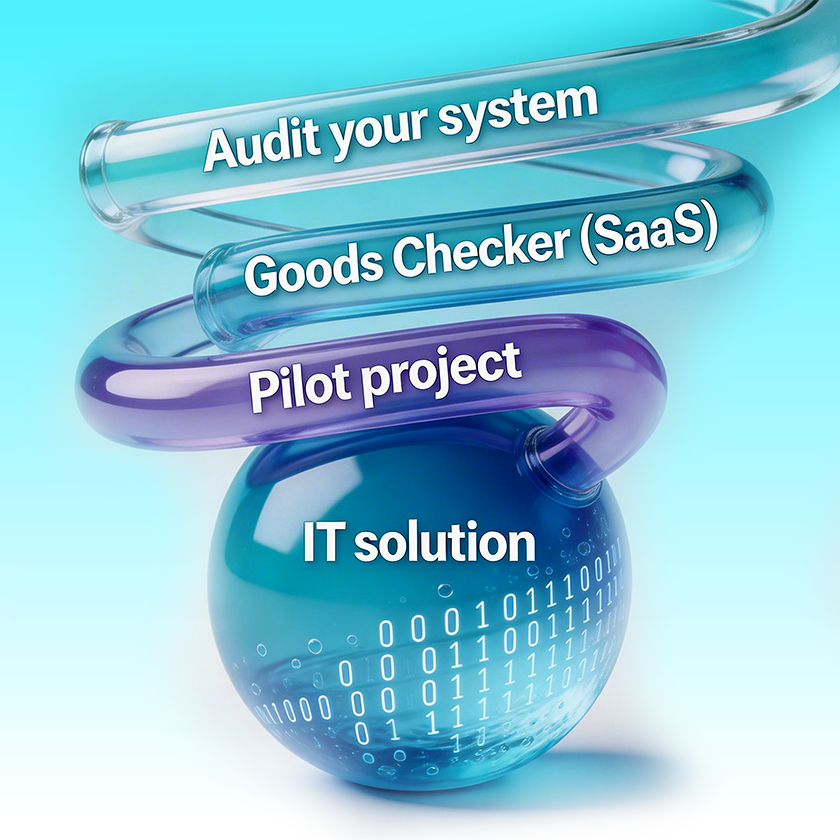
Step 1. Audit current systems. Identify which systems are already used for sales management and analytics. CRM, BI platforms, accounting systems. Determine which are critical for managers’ daily work and where absence of shelf data creates the biggest problems. For example, sales reps work in CRM and receive tasks there. Logically, display data should be integrated there. Management makes decisions based on dashboards in Power BI or Tableau. Then priority is integration with these platforms.
Step 2. Choose a solution with simple integration. Goods Checker uses REST API for corporate system integration, allowing pilot project launch in 2-3 weeks. The SaaS model enables selecting necessary modules and features for specific business tasks without paying for all functionality upfront.
Step 3. Pilot project on limited sample. Select 10-20 retail locations representing different location types. Large supermarkets, small stores, cafes. Configure integration for one key metric that’s easy to measure. For example, stock percentage of top 10 SKUs on shelves. Run the pilot for a month, collect user feedback, and evaluate results. A successful pilot will show what adjustments are needed before scaling across the entire network and provide concrete effect numbers to justify further investment.
When Shelf Audit Integration Won't Deliver Results
AI monitoring integration isn’t for everyone. There are situations when implementation will be difficult or won’t deliver results.
Legacy CRM or ERP systems without APIs will require substantial modifications. This will increase project timeline and budget. In such cases, it makes sense to first modernize basic infrastructure.
Unstable business processes make even the most advanced system useless. Lack of clear responsibility distribution between departments or constantly changing KPIs hinder effective operations. Automation works after processes are established and stable.
Poor photo quality is critical for product recognition. Blurry shots, poor lighting, wrong shooting angles reduce system accuracy. Before implementation, it’s important to train merchandisers on photography rules and control quality at launch.
From Fragmented Data to End-to-End Automation
Integrating AI shelf monitoring with corporate systems changes the approach to sales management in FMCG. Data on actual shelf conditions becomes part of a unified management system, enabling companies to respond faster to problems, plan more accurately, and make decisions based on the complete picture.
The market is moving toward automation, and companies beginning implementation now gain competitive advantage over those continuing with old processes.