

FMCG manufacturers, especially beverage producers, invest heavily in trade equipment: branded coolers for drinks, display cases for tobacco products, cabinets for pharmaceutical goods. Companies install this equipment in thousands of retail locations, but after installation, they often lose track of where exactly their assets are and how they’re being used.
The problem escalates as your supply network grows. Managing hundreds of locations? Spreadsheets and periodic checks still work. But scale to several thousand stores, pharmacies, or gas stations, and without a centralized equipment database, you lose control.
In this article, we’ll examine why it’s important for FMCG manufacturers to control equipment, what happens if they don’t, and how to solve this problem.
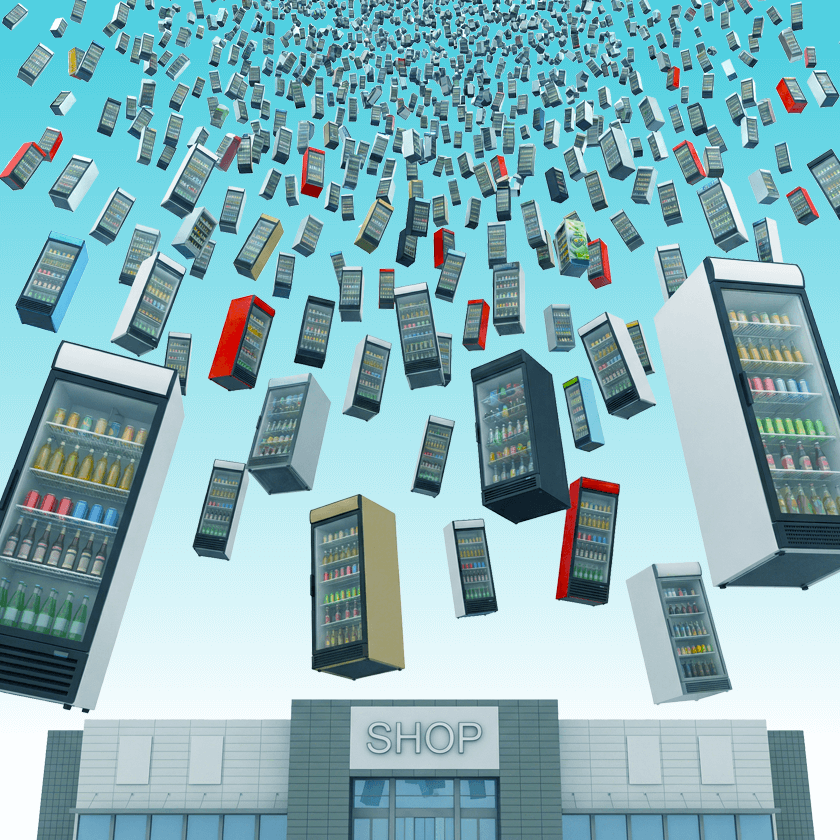
- FMCG manufacturers are losing control over assets worth millions. Branded coolers, display cases, and cabinets are installed in thousands of retail locations, but companies don’t know where they are, what condition they’re in, and whether they’re being used for the brand’s products or occupied by competitors’ goods.
- Excel spreadsheets don’t work for controlling thousands of equipment units. Static records of shipments quickly become outdated and turn into purchase history rather than an actual asset registry.
- Equipment cataloging linked to visits solves the problem. IT systems create a unified database of all assets and require checking each unit during merchandiser visits. This gives companies complete transparency, accurate delivery planning, and real data for assessing marketing investment effectiveness.
The Hidden Cost of Poor Equipment Tracking
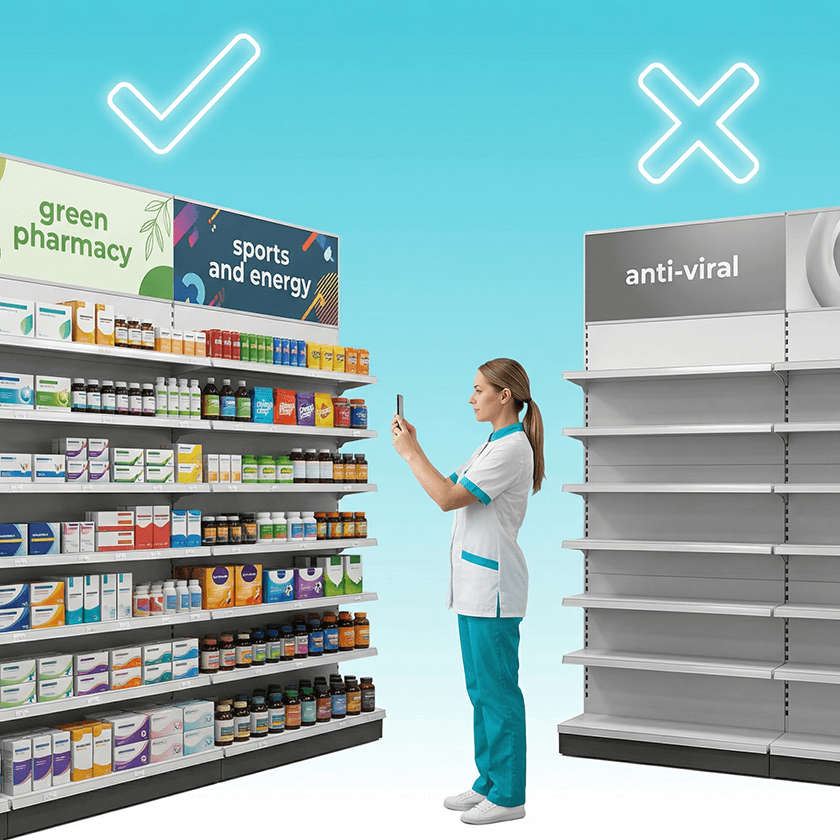
Take a beverage manufacturer supplying thousands of retail locations nationwide. Each location has several units of branded equipment installed. Sure, the company has invoices and contracts from when they signed store agreements. But this paperwork sits in separate files—there’s no unified database. Without pulling up archives, management can’t find out how many coolers are in a specific retail location and what sizes they are. The real question? Nobody knows if they’re being used for the brand’s products, if competitors have taken over the space, or if these coolers even exist anymore.
This blind spot creates multiple problems. You can’t control the planogram in a specific cabinet if you don’t know where it is or its condition. Branded equipment isn’t just storage—it’s a marketing asset and an additional point of sale. Without understanding how it’s being used, the manufacturer loses control over marketing campaign effectiveness. Your branded coolers should only hold your products—that’s the deal. But if a cabinet is stocked with competitor products or sits empty, the promotion fails, and you never know. And most importantly—dishonest merchandisers may not fully complete their work.
Here’s how it plays out: A merchandiser visits a location with three branded coolers. They photograph one, the system confirms planogram compliance, and the visit gets marked successful. The other two coolers? Unattended. Maybe empty shelves, maybe competitor products—but no one checks. In reporting, everything looks good, all tasks are completed, though the real picture may be completely different.
Tracking equipment in Excel or internal accounting systems only gets you so far. You log that a cooler went to store #4337, note its specs and installation date. But that’s static data. It doesn’t update automatically, it’s not linked to actual store visits, and it doesn’t show which equipment is actually working or controlled—much less its condition.
Fast-forward six months to a year: your database looks more like a purchase log than an actual asset registry. Nobody knows how many units actually function, where you need repair or replacement, which locations get proper service and which merchandisers ignore. Most critically: are your brand standards even being followed?
The Solution — Equipment Cataloging and Constant Monitoring
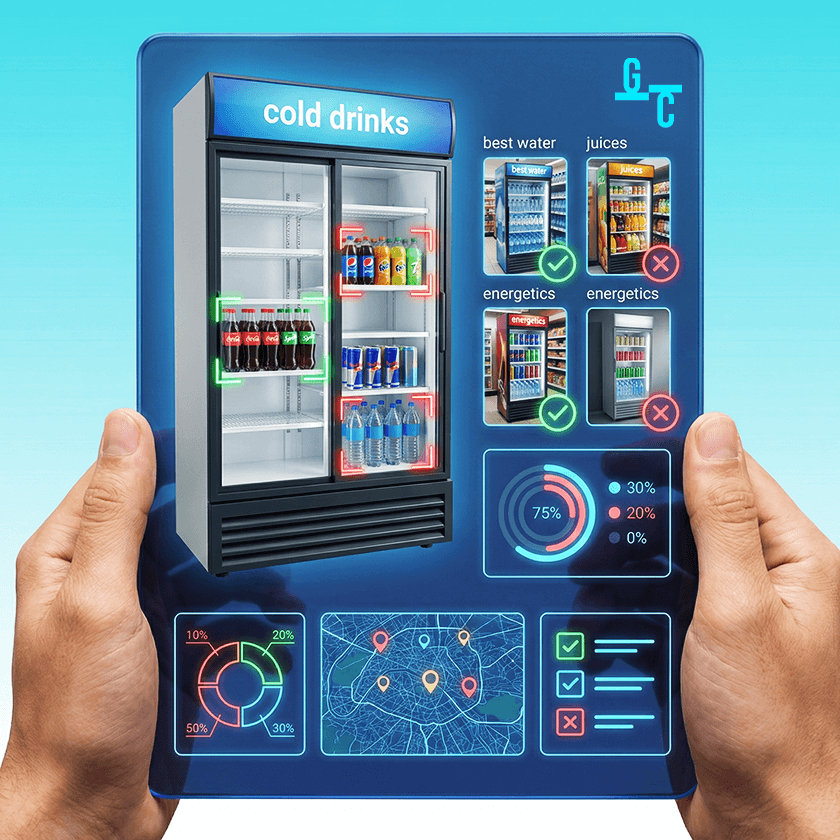
To keep data current, build a unified database of all store equipment and monitor its use at each merchandiser visit. IT solutions help organize such tracking.
Take Goods Checker, a merchandising automation platform. Its equipment management module lets you build a centralized catalog with detailed specs for each equipment type. Each unit links to a specific store with detailed attributes: type, owner, photo, dimensions, POS material zone, date added, etc.
You upload initial data from existing sources—those same spreadsheets and accounting systems you already have. Then the system updates information after each merchandiser visit. No initial database? Or an incomplete one? Goods Checker can collect equipment information in the field. When an employee arrives at a location, the system knows exactly how many units need checking. Three coolers on site means three photos and three planogram checks.
Reports show the number of equipment units assigned to each location and actually checked during the visit. If a merchandiser misses one cabinet, it flags immediately. Managers spot and fix misuse or damage faster.
The Business Impact
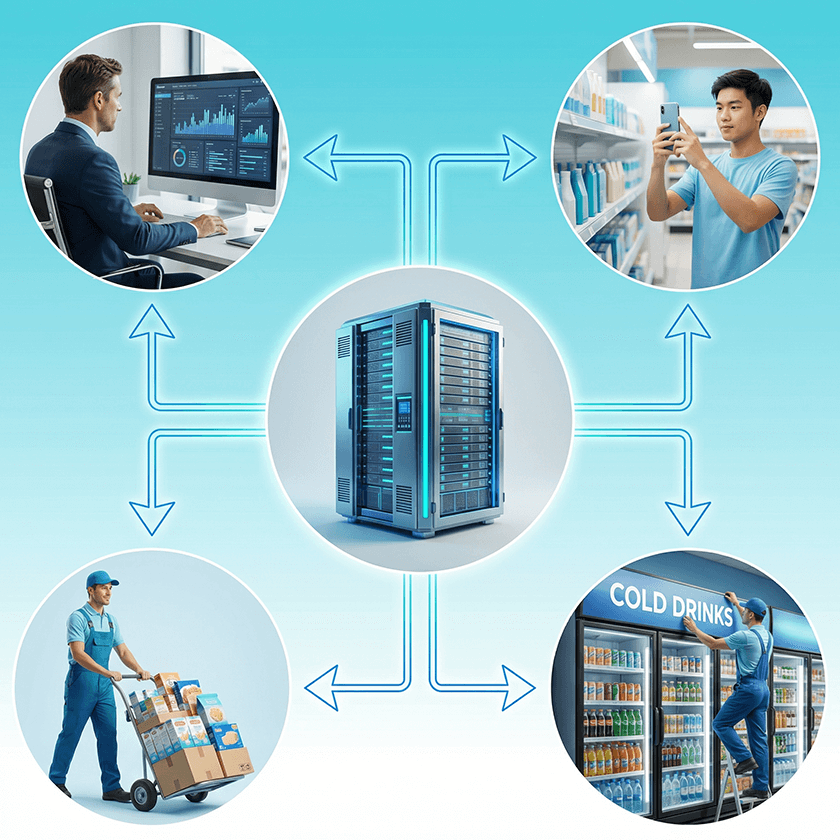
You get transparent, continuous equipment control. Managers know asset locations, quantities, and condition. They plan deliveries more accurately by seeing each unit’s capacity per location. Planograms reflect reality, not assumptions.
Marketers plan campaigns with real data on branded equipment placement and usage—and accurately measure ROI at each point of sale.
Merchandisers shift from box-checking to comprehensive display control, POS optimization, and POSM management. The system won’t let them skip tasks, ignore equipment, or close out a visit prematurely—every registered unit must be verified. Result? Better field team performance and managers get complete, current, reliable data on goods and equipment at each store.
Equipment cataloging matters for any company deploying its own assets in retail chains. Beverage manufacturers with thousands of coolers in stores and gas stations. Tobacco companies with display cases at every POS. Pharma brands with cabinets in pharmacy chains. All need control over assets nationwide. With Goods Checker, equipment transforms from a spreadsheet line item into a profit-generating asset under active management.